End-of-Life Bus Scrapping in India: Giving Old Buses a Sustainable New Beginning.
Buses have been the backbone of public transportation for over a century. They connect cities, villages, schools, workplaces, tourist destinations, airports, and hospitals, transporting millions of passengers every day. From school buses carrying children safely to classrooms to state transport buses connecting rural India with urban centers, buses play an indispensable role in the nation's mobility.
However, like every vehicle, buses eventually reach the end of their operational life. Years of continuous service expose them to mechanical wear, structural fatigue, corrosion, rising maintenance costs, and declining fuel efficiency. At this stage, retaining an old bus can become unsafe, uneconomical, and environmentally harmful.
Responsible end-of-life bus scrapping ensures these vehicles are dismantled, recycled, and disposed of in an environmentally sustainable manner. At CarBasket, we help government departments, schools, colleges, hospitals, charitable trusts, NGOs, transport operators, and private companies responsibly recycle old buses through our vehicle scrapping network across India.
The History of Buses
The word "bus" originates from the Latin word omnibus, meaning "for everyone." Public bus transportation began in the early 19th century with horse-drawn buses operating in European cities.
The first motorized buses appeared in the late 1800s following the invention of internal combustion engines. As technology advanced, buses became larger, safer, and more reliable, transforming urban and rural transportation worldwide.
In India, bus transportation expanded rapidly after independence, with state transport corporations and private operators connecting remote regions and supporting economic development. Today, India operates one of the world's largest bus transportation networks, carrying millions of passengers every day.
Why Buses Are Important
Buses are more than just vehicles—they are a lifeline for communities.
They provide affordable transportation, reduce traffic congestion, lower per-passenger fuel consumption, and improve access to education, healthcare, and employment.
A single bus can replace dozens of private vehicles on the road, reducing fuel consumption and emissions while making transportation more accessible for everyone.
Where Buses Are Used
Bus fleets serve a wide range of sectors across India.
Public Transportation
Government and private transport operators provide daily passenger services between cities, towns, and villages.
Schools and Colleges
Educational institutions use buses to transport students and staff safely.
Corporate Employee Transportation
Companies operate staff buses to reduce traffic congestion and ensure timely commuting.
Tourism
Luxury coaches and tourist buses support domestic and international travel.
Hospitals
Hospitals use buses to transport medical staff, patients, and outreach teams.
Airports
Airport shuttle buses connect passengers between terminals and aircraft.
Religious and Charitable Organizations
Trusts and NGOs use buses to transport pilgrims, volunteers, and community members during social welfare programs.
Industries
Large factories provide employee transportation to manufacturing plants and industrial areas.
When Does a Bus Become an End-of-Life Vehicle?
A bus may be considered an End-of-Life Vehicle (ELV) when:
- It has completed its useful service life.
- Maintenance costs become excessively high.
- The engine and transmission require repeated repairs.
- Structural corrosion compromises safety.
- Fuel efficiency declines significantly.
- It no longer meets applicable safety or emission requirements.
- It is no longer economical to operate.
Replacing aging buses with newer, safer, and cleaner models helps improve passenger safety, reduce emissions, and lower operating costs.
Why Old Buses Should Be Scrapped Responsibly
Keeping an old, deteriorated bus in service can lead to several problems:
Safety Risks
Aging components increase the risk of brake failure, steering issues, suspension problems, and structural damage.
Environmental Impact
Older buses often emit higher levels of pollutants and consume more fuel.
Rising Maintenance Costs
Repair expenses eventually exceed the value of continued operation.
Reduced Reliability
Unexpected breakdowns can disrupt passenger services and increase operational costs.
Fleet Modernization
Replacing outdated buses improves efficiency, passenger comfort, and compliance with current standards.
Types of Buses CarBasket Helps Recycle
CarBasket supports responsible recycling of various bus categories, including:
- School buses
- College buses
- Government buses
- State transport buses
- City buses
- Mini buses
- Luxury coaches
- Tourist buses
- Corporate employee buses
- Hospital transport buses
- Airport shuttle buses
- Religious trust buses
- NGO buses
- Electric buses (End-of-Life)
- Diesel buses
- CNG buses
Who Can Use CarBasket's Bus Scrapping Services?
Our services are designed for organizations managing single buses or large fleets.
Government Departments
Municipal corporations, transport authorities, public sector undertakings, and other government agencies.
Educational Institutions
Schools, colleges, universities, coaching institutions, and residential campuses.
Hospitals and Healthcare Organizations
Hospitals, medical colleges, healthcare institutions, and charitable medical organizations.
Religious Trusts
Organizations operating buses for community and pilgrimage services.
NGOs and Charitable Organizations
Non-profit organizations managing transport for social welfare initiatives.
Corporate Companies
Businesses operating employee transportation fleets.
Tourism Operators
Travel agencies and tour operators maintaining tourist coach fleets.
Manufacturing Industries
Factories operating employee transport services.
The Bus Recycling Process
Responsible bus recycling involves several stages:
1. Vehicle Inspection
The bus is evaluated for its condition, ownership documents, and recyclability.
2. Documentation
Ownership documents are verified before the recycling process begins.
3. Vehicle Collection
The bus is transported from the owner's location, where applicable.
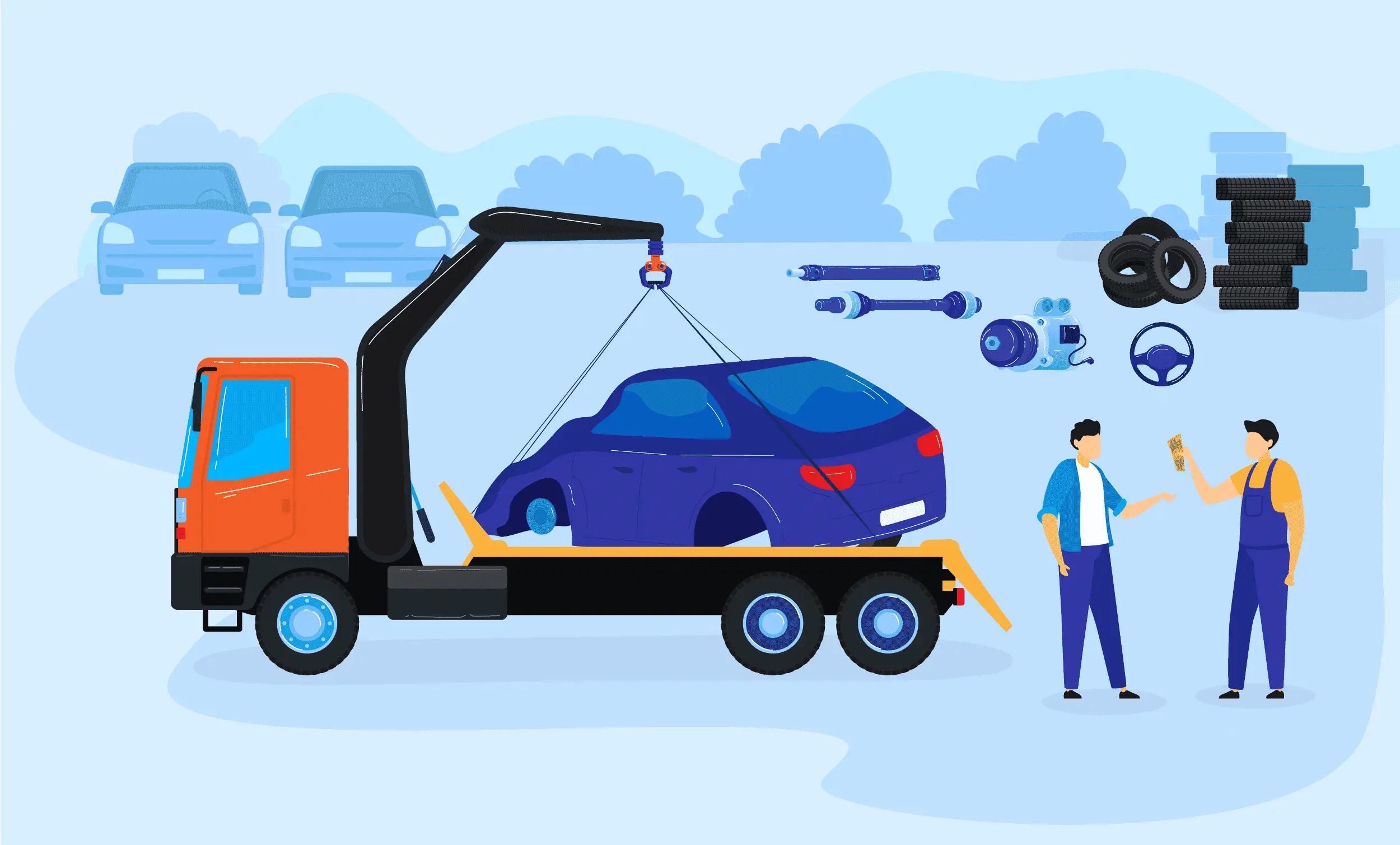
4. Safe Dismantling
Usable components are separated, and hazardous materials are handled responsibly.
5. Material Recovery
Steel, aluminum, copper, plastics, glass, rubber, and other recyclable materials are recovered.
6. Responsible Recycling
Recovered materials are processed for reuse in manufacturing, reducing the demand for virgin resources.
Materials Recovered from a Bus
A modern bus contains valuable recyclable materials such as:
- Structural steel
- Aluminum body components
- Copper wiring
- Electrical systems
- Batteries
- Glass
- Plastic interior panels
- Rubber tyres
- Seats and upholstery (where recyclable)
Recycling these materials supports India's circular economy and helps conserve natural resources.
Environmental Benefits of Bus Recycling
Recycling end-of-life buses offers several environmental advantages:
- Reduces landfill waste.
- Conserves iron ore and other natural resources.
- Saves energy used in manufacturing new metals.
- Reduces greenhouse gas emissions.
- Promotes sustainable industrial practices.
- Supports responsible waste management.
Why Choose CarBasket?
CarBasket simplifies the process of responsibly recycling old buses.
Our services include:
- Competitive scrap valuation
- Free pickup in selected serviceable locations
- Assistance for commercial and institutional fleets
- Vehicle Deposit Certificate
- Environmentally responsible recycling through our network
- Support for schools, hospitals, trusts, NGOs, businesses, and government organizations
- Transparent process with dedicated customer support
Whether you have one bus or an entire fleet, CarBasket provides a professional and streamlined vehicle disposal solution.
Frequently Asked Questions
Can CarBasket scrap school buses?
Yes. We assist schools, colleges, universities, and educational institutions in responsibly disposing of end-of-life school buses.
Do you provide bus scrapping for government organizations?
Yes. We support eligible government departments and public sector organizations, subject to applicable documentation and procedures.
Can private companies scrap employee transport buses?
Absolutely. We assist corporate fleet owners with responsible disposal of old staff transportation buses.
Do you handle multiple buses?
Yes. We can coordinate the recycling of single buses as well as large commercial and institutional fleets.
What documents are generally required?
Requirements vary depending on ownership and location, but commonly include the Registration Certificate (RC), proof of ownership or authorization, and identification documents.
Are electric buses recyclable?
Yes. End-of-life electric buses contain recyclable materials, including batteries, metals, wiring, and structural components, which require specialized handling.
Why should old buses be recycled instead of abandoned?
Abandoned buses can become environmental hazards and safety risks. Responsible recycling helps recover valuable materials, reduces waste, and supports sustainable resource management.