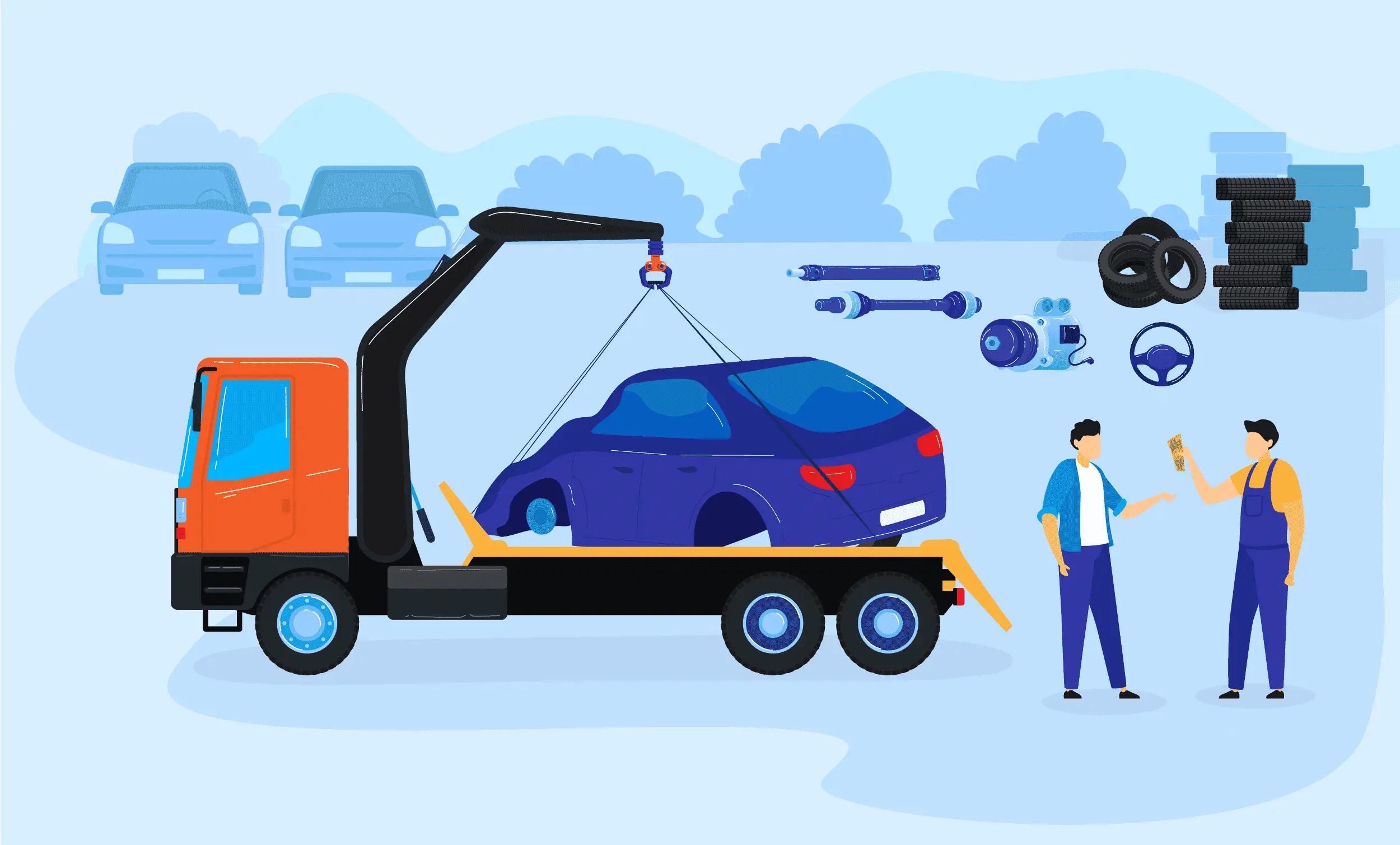
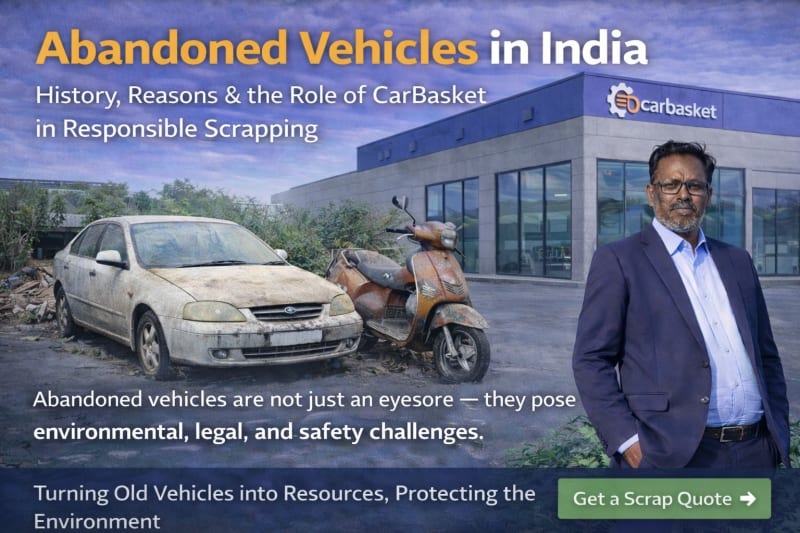
Across Indian cities, highways, residential colonies, and industrial zones, abandoned vehicles have quietly become a growing problem. From rusting cars parked for years to broken trucks left on roadsides, abandoned vehicles are not just an eyesore—they pose environmental, legal, and safety challenges.
This blog explains what abandoned vehicles are, their types, why vehicles get abandoned, the historical background of the issue in India, and how Carbasket provides a responsible solution through authorised vehicle scrapping.
What is an Abandoned Vehicle?
An abandoned vehicle is any motor vehicle left unattended for an extended period without lawful intention of retrieval, repair, or reuse by the registered owner.
In most cases, such vehicles:
- Are unfit to run
- Have expired registration or fitness
- Are accident-damaged
- Are left due to financial, legal, or ownership issues
Over time, these vehicles become end-of-life vehicles (ELVs) and should ideally be scrapped through authorised channels.
Types of Abandoned Vehicles
1. Abandoned Private Cars
These include:
- Old cars parked in residential streets
- Vehicles left after owners migrate or pass away
- Cars with expired RC or high repair costs
Often, these vehicles occupy public space illegally and deteriorate over time.
2. Abandoned Two-Wheelers
Commonly seen near:
- Railway stations
- College campuses
- Old rental properties
Reasons include theft recovery issues, expired documentation, or low resale value.
3. Abandoned Commercial Vehicles (Trucks, Buses)
These vehicles are frequently abandoned due to:
- Failed fitness tests
- Engine or chassis damage
- High maintenance costs
Because of their size, they create serious road safety and traffic hazards.
4. Accident-Damaged Vehicles
After major accidents:
- Insurance claims may be settled
- Vehicles may be declared total loss
- Owners sometimes abandon them due to paperwork complexity
5. Seized or Confiscated Vehicles
Vehicles seized for:
- Legal disputes
- Criminal investigations
- Loan defaults
If cases drag on, vehicles deteriorate and are eventually abandoned.
6. Unclaimed Government or Institutional Vehicles
Old vehicles owned by:
- Government departments
- PSUs
- Municipal bodies
These often remain unused due to slow disposal procedures.
Why Do Vehicles Get Abandoned? (Key Reasons)
1. High Repair Cost vs Low Value
When repair costs exceed resale value, owners abandon vehicles instead of fixing them.
2. Expired Registration or Fitness
Vehicles older than permissible limits may:
- Fail fitness tests
- Require costly compliance upgrades
Many owners choose abandonment rather than legal scrapping.
3. Legal & Ownership Complications
Issues like:
- Owner death
- Missing RC
- Loan or hypothecation disputes
These make scrapping seem complicated, leading to neglect.
4. Accident & Insurance Settlements
Once insurers settle claims, owners sometimes stop caring about the vehicle’s final disposal.
5. Migration or Relocation
People relocating cities or countries may leave behind non-functional vehicles.
6. Lack of Awareness
Many owners don’t know:
- How to scrap vehicles legally
- That authorised scrapping services exist
- That abandoned vehicles can cause legal penalties
Historical Background of Abandoned Vehicles in India
Early Years (Pre-2000)
- Vehicles had longer lifespans
- Less enforcement of fitness and emission norms
- Abandoned vehicles were fewer and ignored
Rapid Motorisation (2000–2015)
- Explosion in vehicle ownership
- Urban space became limited
- Informal scrap markets expanded
Abandoned vehicles started piling up in cities.
Regulatory Shift (2015 onwards)
- Stricter pollution norms
- National Vehicle Scrappage Policy
- Push for authorised recycling facilities
The focus shifted from ignoring abandoned vehicles to systematic removal and recycling.
Problems Caused by Abandoned Vehicles
🚫 Environmental Pollution
- Oil and coolant leaks
- Battery acid seepage
- Rust contamination of soil
🚧 Road Safety Hazards
- Obstruction to traffic
- Reduced visibility
- Fire risk in dry conditions
🏙️ Urban Decay
- Reduced parking availability
- Decline in neighbourhood aesthetics
- Public complaints and disputes
⚖️ Legal Consequences
Authorities can:
- Impose fines
- Tow vehicles
- Recover costs from owners
How Carbasket Solves the Abandoned Vehicle Problem
1. Identification & Assessment
Carbasket helps assess:
- Vehicle condition
- Ownership status
- Scrapping ability based on condition and documents
2. Safe Pickup & Logistics
- Doorstep pickup of abandoned or non-running vehicles
- Special handling for damaged or missing-part vehicles
3. Transparent Pricing
- Fair quotes based on recoverable material
- Clear communication if parts are missing
4. Authorised Scrapping Process
Carbasket follows structured steps:
- Depollution
- Dismantling
- Material segregation
- Responsible recycling
5. Documentation Guidance
Carbasket assists owners in understanding:
- Scrapping procedures
- De-registration support (as applicable)
- Compliance requirements
6. Environmental Responsibility
By recycling abandoned vehicles:
- Metals re-enter the supply chain
- Hazardous waste is safely handled
- Landfill and pollution burden is reduced
Why Scrapping Abandoned Vehicles is Better Than Leaving Them
Abandonment Responsible Scrapping
Pollution risk Eco-friendly disposal
Legal trouble Compliance & peace of mind
No value recovery Fair scrap value
Public nuisance Cleaner roads
Safety hazards Sustainable recycling
The Role of Carbasket in India’s Circular Economy
Carbasket helps convert abandoned vehicles into reusable resources, supporting:
- Circular economy
- Clean mobility goals
- Sustainable urban development
Every scrapped vehicle reduces raw material extraction and environmental damage.
FAQs - Abandoned Vehicles
What is considered an abandoned vehicle in India?
Any vehicle left unattended for a long time without intent or ability to use, repair, or legally store it.
Can abandoned vehicles be scrapped?
Yes, once ownership and eligibility are established, they can be scrapped through authorised recyclers like Carbasket.
Who is responsible for an abandoned vehicle?
Typically the registered owner, even if the vehicle is unused.
Do abandoned vehicles cause legal issues?
Yes. Authorities may impose penalties or towing charges.
How does Carbasket help with abandoned vehicles?
Carbasket offers pickup, transparent pricing, safe dismantling, and guidance on scrapping procedures.