That smoke coming from your exhaust isn’t just “normal fumes.”
It’s your engine sending you a diagnostic message.
Ignore it, and you might be ignoring a future big repair bill 💸🛠️
Your car speaks through sounds, vibrations, and smoke. The colour of the exhaust is one of the most important early warning signs of what’s happening inside your engine.
Let’s decode what your car is trying to tell you 👇
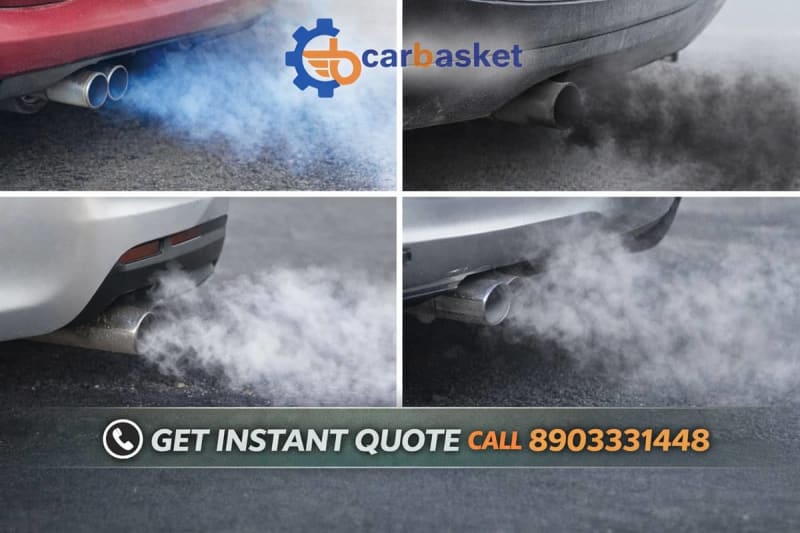
🔵 BLUE SMOKE - Oil Is Burning
If you see blue-tinted smoke, it means engine oil is entering the combustion chamber and getting burned.
Possible causes:
- Worn piston rings
- Damaged valve seals or guides
- Turbocharger oil leaks
What it means:
- Oil level will drop faster
- Engine parts may wear faster
- Long-term neglect can lead to major engine damage
⚫ BLACK SMOKE - Too Much Fuel
Black smoke means your engine is running “rich” - more fuel is being injected than it can burn properly.
Possible causes:
- Clogged air filter
- Dirty or leaking fuel injectors
- Faulty sensors (MAF / O2)
- Poor fuel-air ratio
What it means:
- Lower mileage
- Higher pollution
- Engine inefficiency
This is common in diesel vehicles when maintenance is overdue.
⚪ WHITE SMOKE - Coolant Leak (⚠️ Serious Warning)
Light white smoke on cold mornings can be normal.
But thick white smoke that continues after the engine warms up is a danger sign.
Possible causes:
- Blown head gasket
- Cracked cylinder head
- Cracked engine block
- Coolant entering combustion chamber
What it means:
This is a serious engine problem that can lead to complete engine failure if ignored.
🔘 GREY SMOKE - Poor Combustion
Grey smoke is less obvious but still important.
Possible causes:
- Engine misfires
- Oil pressure problems
- Faulty engine control systems
- Transmission fluid leaks (in some cases)
What it means:
Your engine isn’t running efficiently and needs inspection.
💡 Pro Mechanic Tip
If smoke continues even after the engine warms up:
- Don’t ignore it
- Don’t delay inspection
- Don’t assume it will fix itself
Early diagnosis can save:
- Your engine
- Your fuel cost
- Your wallet
Preventive maintenance always costs less than major repairs.
Facts vs Myths About Exhaust Smoke
Myth 1: All smoke is normal in old cars
Fact: Continuous smoke indicates a mechanical problem.
Myth 2: Diesel cars always produce black smoke
Fact: Properly maintained diesel engines should not produce visible smoke.
Myth 3: White smoke in winter is always fine
Fact: Only light vapour is normal. Thick smoke is a warning.
Myth 4: Smoke will go away on its own
Fact: Problems usually worsen if ignored.
Legal & Environmental Angle (Motor Vehicles Framework)
Under the Motor Vehicles Act and pollution control norms:
- Vehicles must meet emission standards
- Excess smoke can lead to penalties
- PUC (Pollution Under Control) compliance is mandatory
- Heavily polluting vehicles can be restricted from roads
Smoke is not just a mechanical issue - it’s also a compliance issue.
When Repairs Stop Making Sense
Sometimes, repeated smoke problems mean:
- Engine life is ending
- Repair costs are too high
- Fuel efficiency is gone
- Pollution levels are high
At this stage, maintaining the vehicle may cost more than its value.
Where Carbasket Vehicle Scrapping Helps
If a vehicle becomes:
- Over-polluting
- Engine-damaged
- Too expensive to repair
The Carbasket Vehicle Scrapping Platform helps with:
- Legal removal from the road
- Proper recycling
- Safe RC cancellation
- Pollution reduction
Old, smoking vehicles are among the biggest contributors to air pollution. Responsible scrapping helps keep cities cleaner.
FAQs
Q1. Is a little smoke normal?
Light vapour at startup can be normal, but continuous smoke is not.
Q2. Which smoke colour is most dangerous?
Thick white smoke is usually the most serious.
Q3. Can black smoke damage the engine?
Yes, it reduces efficiency and can harm engine components.
Q4. Should I stop driving if I see blue smoke?
You should get it checked quickly to prevent engine wear.
Q5. Can smoke fail PUC test?
Yes. Excess emissions can lead to test failure.