Long before modern fuel stations, digital meters, and long queues of vehicles, India’s petrol journey began quietly in Mumbai.
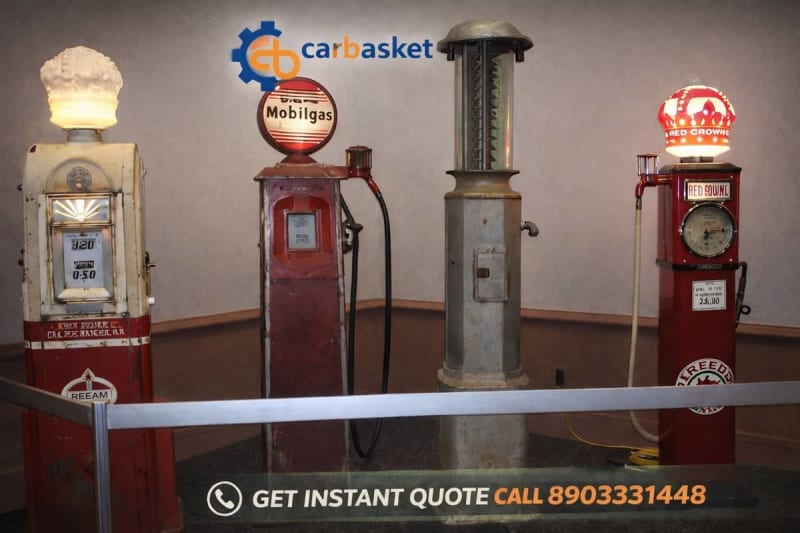
At Worli, the Burma Shell Company established one of India’s earliest petrol pumps using hand-operated dispensers - a moment that marked the beginning of the country’s automotive fuel infrastructure.
And here’s the most fascinating part…
Petrol cost just 12 paise per litre.
But at that time, very few people even needed fuel.
A Different India, A Different Era
In the early 20th century:
- Cars were extremely rare
- Only wealthy Indian families owned vehicles
- British officers were the primary car users
- Roads were mostly empty
Fuel demand was limited because mobility itself was limited.
Owning a car wasn’t just luxury — it was status, power, and privilege.
The Role of Burma Shell in India’s Fuel History
The Burma Shell Company was among the first major players to bring organized fuel supply to India.
At the Worli petrol station:
- Fuel was dispensed manually
- Staff operated hand-pump dispensers
- Transactions were simple and local
- Cars stopped occasionally, not constantly
This was the foundation of India’s fuel ecosystem.
From Burma Shell to Bharat Petroleum
After India’s independence, the government began strengthening control over critical industries.
During this transition:
- The government gradually acquired foreign oil companies
- Burma Shell’s operations were taken over
- The company eventually evolved into Bharat Petroleum
This marked a major shift:
From colonial control → national ownership
From limited supply → nationwide expansion
When Petrol Was Cheaper Than Water (Almost)
It’s hard to imagine today, but petrol once cost 12 paise per litre.
However, that price reflected a very different economy:
- Very few cars existed
- Fuel demand was low
- Automobile ownership was rare
Today, India has:
- Millions of vehicles
- Massive fuel demand
- High daily consumption
That tiny petrol pump in Worli quietly witnessed the start of a transport revolution.
How Fuel Stations Changed India
Over the decades:
- Roads expanded
- Vehicle ownership increased
- Public transport grew
- Logistics networks strengthened
Petrol pumps became:
- Lifelines for travel
- Symbols of growth
- Support systems for economic expansion
Legal & Policy Angle (Motor Vehicles Framework)
Under evolving transport regulations supported by the Motor Vehicles Act:
- Fuel access enabled vehicle growth
- Vehicle registration systems expanded
- Road safety and compliance became structured
- Transport networks matured across India
The availability of petrol infrastructure helped shape the entire automotive ecosystem.
Myths vs Facts About Early Petrol Pumps
Myth 1: Petrol pumps were everywhere in early India
Fact: They were rare and limited to major cities.
Myth 2: Many people owned cars back then
Fact: Only rich families and British officers could afford them.
Myth 3: Cheap petrol meant easy travel
Fact: Cars themselves were extremely expensive and rare.
A Story of Growth: Then vs Now
From one small pump in Worli to:
- Thousands of fuel stations nationwide
- Crores of vehicles on roads
- Massive daily fuel consumption
India’s mobility journey has been extraordinary.
That early petrol pump didn’t just sell fuel —
It powered the beginning of modern transport in India.
Where Carbasket Vehicle Scrapping Connects
As India’s vehicle population grew:
- Older vehicles accumulated
- Pollution levels increased
- Road safety concerns rose
Today, responsible vehicle lifecycle management is essential.
Through the Carbasket Vehicle Scrapping Platform, end-of-life vehicles are:
- Removed legally from the system
- Properly recycled
- Prevented from adding to pollution
Just like early petrol pumps supported mobility,
Modern scrapping supports sustainability.
FAQs
Q1. Where was India’s first petrol pump located?
At Worli in Mumbai, set up by the Burma Shell Company.
Q2. How was petrol dispensed earlier?
Using hand-operated manual dispensers.
Q3. Who owned cars in early India?
Mostly wealthy families and British officers.
Q4. How did Burma Shell become Bharat Petroleum?
Post-independence, the government acquired the company as part of nationalisation.
Q5. Why is this history important today?
It shows how India’s mobility ecosystem evolved from scarcity to scale.