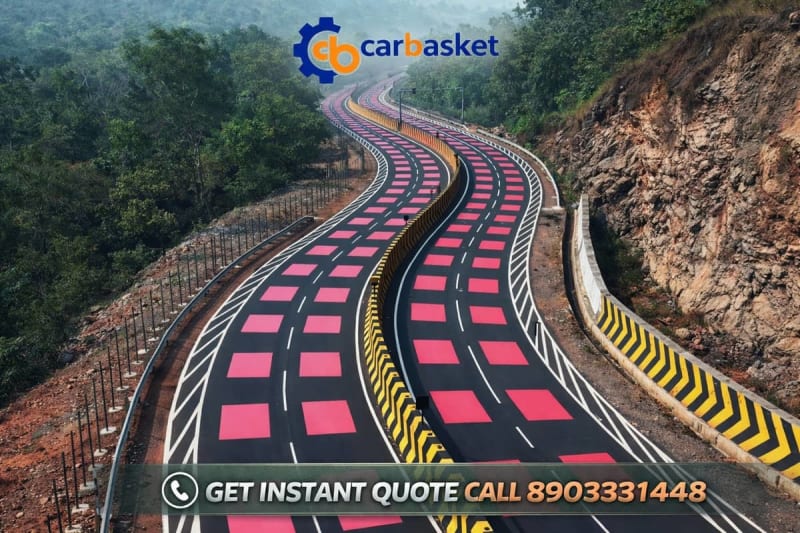
India is witnessing a unique transformation in road infrastructure with the development of the country’s first “Red Road” between Jabalpur and Bhopal in Madhya Pradesh. More than just a road, this project represents a thoughtful step towards wildlife conservation, eco-sensitive infrastructure, and nature-friendly mobility.
Unlike conventional black asphalt highways, this stretch is designed to blend with the natural environment, passing through regions surrounded by forests and raw wilderness. The drive feels different - calmer, more scenic, and closer to nature.
What Is India’s “Red Road”?
The Red Road refers to a specially designed road surface that uses a distinct reddish material or coating, giving it a natural appearance that integrates better with forest surroundings.
This initiative aims to:
- Reduce visual disturbance in forest zones
- Improve safety in wildlife corridors
- Create eco-sensitive infrastructure
- Enhance the travel experience
It is not just about colour - it is about respecting the ecosystem while building connectivity.
Why This Road Matters for Wildlife Conservation
The Jabalpur - Bhopal stretch passes through regions that are close to forest belts and wildlife movement zones. Infrastructure in such areas needs careful planning to avoid harming animals and their natural habitats.
The Red Road concept helps in:
- Making roads less visually intrusive in forest areas
- Supporting awareness among drivers in wildlife zones
- Encouraging slower and safer driving
- Promoting eco-conscious development
It reflects a growing shift towards environmentally responsible road planning in India.
A Drive That Feels Truly Different
Travelers who pass through this stretch often describe it as:
- Calm and scenic
- Surrounded by untouched greenery
- A peaceful alternative to typical highways
- A route that feels closer to nature
Instead of high-speed, urban-style roads, this stretch offers a more grounded driving experience.
The Bigger Shift: Eco-Sensitive Infrastructure in India
India is increasingly focusing on balancing development with conservation. Projects like this indicate:
- Greater respect for wildlife corridors
- Eco-friendly road engineering practices
- Integration of nature into modern infrastructure
- Responsible expansion of national connectivity
This is a sign that infrastructure growth and environmental protection can go hand in hand.
Legal & Safety Angle (Motor Vehicles Framework)
Under evolving safety and infrastructure considerations supported by the Motor Vehicles Act:
- Drivers must follow speed discipline in forest areas
- Wildlife crossing zones require extra caution
- Safe and responsible driving reduces roadkill incidents
While the Act does not specify road colours, it strongly emphasizes:
- Road safety
- Environmental awareness
- Responsible driving behaviour
Myths vs Facts About the Red Road
Myth 1: The red colour is only for decoration
Fact: It helps roads blend with natural surroundings and promotes eco-sensitive planning.
Myth 2: It’s just a tourism project
Fact: It supports conservation and safer wildlife movement zones.
Myth 3: It affects vehicle performance
Fact: Road material does not impact engine performance.
Myth 4: It’s the only such road planned
Fact: More eco-friendly road concepts may emerge in the future.
Factors Behind This Unique Road Design
Several considerations shaped the Red Road concept:
- Forest proximity
- Wildlife movement patterns
- Visual harmony with nature
- Sustainable infrastructure planning
- Reduced environmental disruption
This marks a new approach to road building in India.
How This Connects to Sustainable Mobility
Eco-friendly roads are one part of the sustainability journey. Another major factor is cleaner vehicles and responsible disposal of old ones.
Older vehicles often:
- Emit more pollution
- Create noise in forest zones
- Affect environmental balance
Through the Carbasket Vehicle Scrapping Platform, end-of-life vehicles are:
- Removed legally from the road
- Recycled responsibly
- Prevented from increasing pollution
Cleaner roads + cleaner vehicles = healthier ecosystems.
FAQs
Q1. Where is India’s first Red Road located?
Between Jabalpur and Bhopal in Madhya Pradesh.
Q2. Why is it called a Red Road?
Because of its distinct reddish surface that blends with natural surroundings.
Q3. Is it built for tourism?
It supports both conservation and better travel experience.
Q4. Does the red colour affect driving?
No. It functions like any normal highway surface.
Q5. Why is it important for wildlife?
It promotes eco-sensitive development in forest regions.
Geo Targeting : Madhya Pradesh | Jabalpur | Bhopal | Indore | Gwalior | Ujjain | Sagar | Satna | Central India