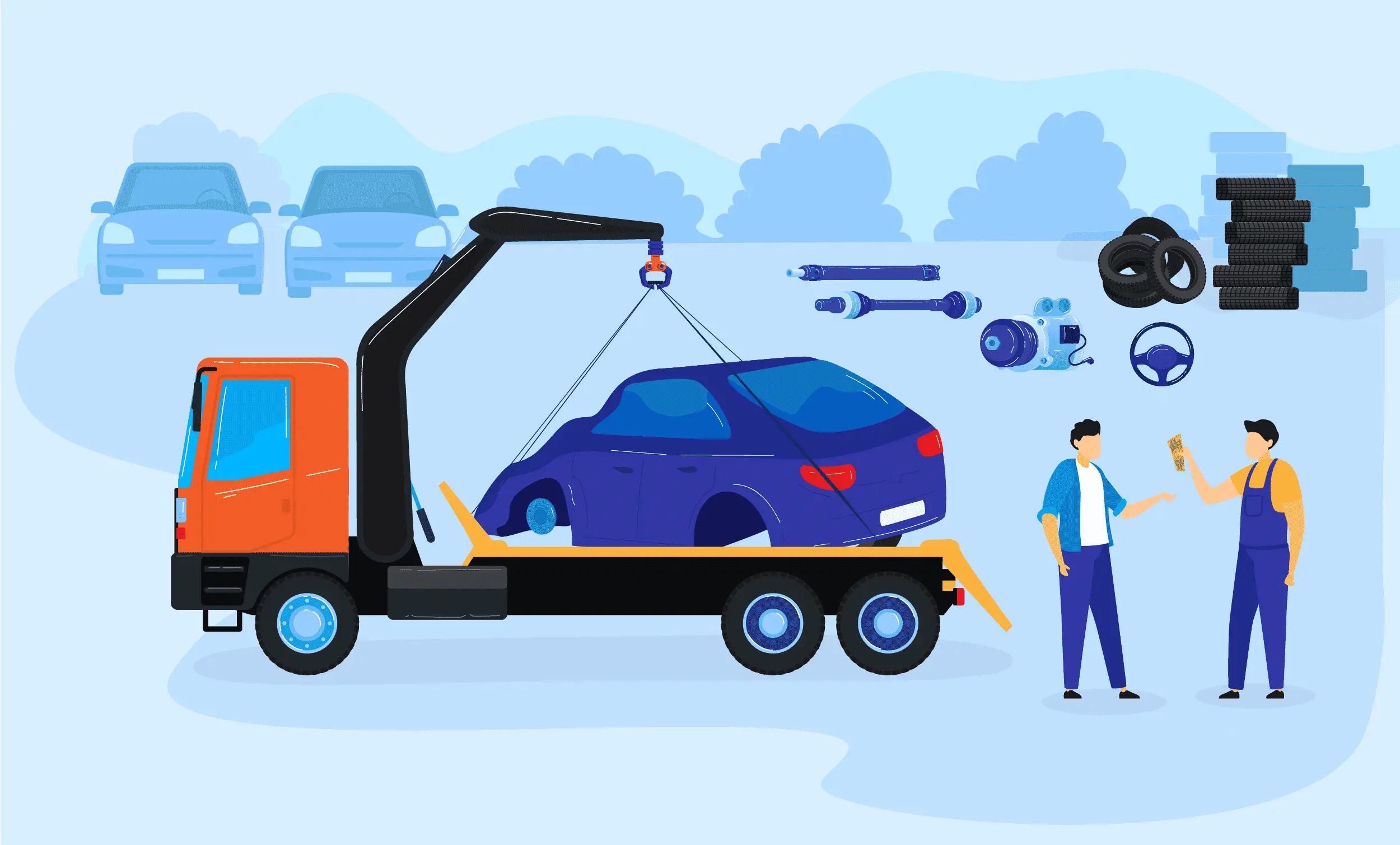
Industrial vehicles—such as trucks, buses, construction machines, forklifts, trailers, mining vehicles, and heavy commercial vehicles—have a far more complex end-of-life process compared to personal cars or two-wheelers. They contain large engines, heavy metal structures, hydraulic systems, gear assemblies, and industrial-grade materials that require specialised, safe, and compliant recycling.
Here’s a complete breakdown of how industrial vehicle scrappage and recycling works, step by step.
⚙️ 1. Pre-Scrapping Inspection & Documentation
Before dismantling begins, the Carbasket scrapping facility (VSF) completes:
- Vehicle verification (VIN / chassis number)
- Weight and component assessment
- RC validity check
- Owner authentication
- Pollution control & fitness status review
- Insurance, NOC, and pending challan clearance
- Recording the vehicle in VAHAN for scrapping initiation
✔ Carbasket ensures all documents are handled end-to-end, including RC cancellation and official scrappage records.
🔧 2. Depollution – Safe Removal of Hazardous Materials
Industrial vehicles contain significant quantities of oils and chemicals. All hazardous waste is removed using specialised depollution equipment:
- Engine oil
- Hydraulic oil
- Brake fluid
- Transmission oil
- Coolant
- Grease
- Diesel residue
- AC refrigerants
- Battery acid
These are stored in sealed containers and sent for eco-friendly disposal, as per PCB norms.
✔ This is the most critical phase; unregulated scrap yards cannot handle it safely.
🪛 3. Dismantling of Reusable Components
Industrial vehicles often contain commercial-grade components that can be refurbished or reused:
- Engines & gearboxes
- Alternators
- Radiators
- Axles
- Tyres & rims
- Hydraulic cylinders
- Pumps
- Industrial batteries
Professional dismantlers segregate reusable parts into:
- Usable
- Reconditionable
- Recycling-only
🏗️ 4. Chassis Cutting & Structural Breakdown
The vehicle frame (which may weigh several tonnes) is cut using:
- Plasma cutters
- Hydraulic shears
- Industrial torches
This step reduces the vehicle into manageable scrap pieces.
It also produces the official chassis-cut proof required for scrappage documentation.
✔ CarBasket provides video proof + chassis-cut images to the owner.
🔩 5. Sorting of Metals & Materials
Industrial vehicles contain a mix of metals and materials:
Metals extracted:
- Mild steel
- Cast iron
- Aluminium
- Copper
- Brass
- Stainless steel
Other materials:
- Plastic
- Rubber
- Glass
- Fabric
- Wiring harness
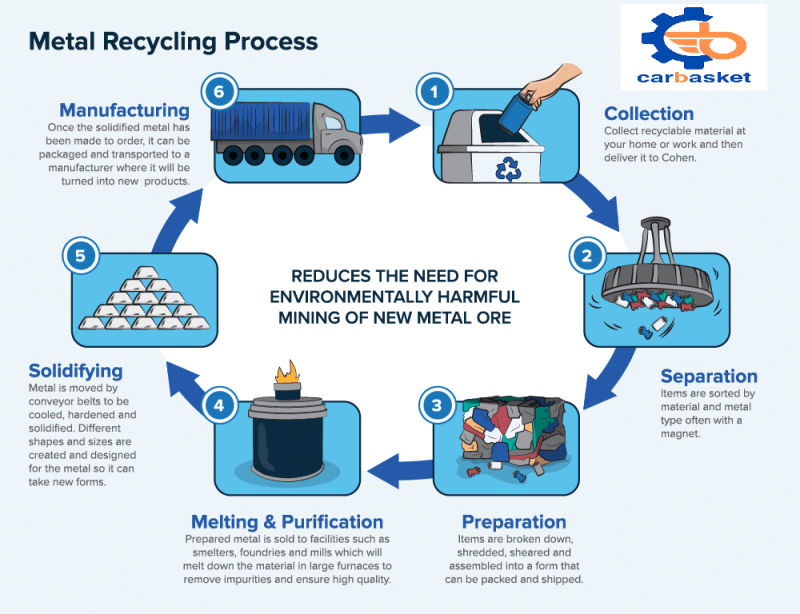
These are separated through:
- Magnetic sorting
- Shredding
- Granulation
- Manual segregation
- Density-based separation
🔥 6. Melting & Recycling of Metals
Metals are sent to recycling plants where they undergo:
- Shredding
- Furnace melting
- Impurity removal
- Casting into ingots
These recycled metals are reused in:
- New vehicle components
- Construction beams
- Industrial equipment
- Infrastructure projects
♻️ Industrial vehicle scrapping recovers 90–95% recyclable material, making it highly sustainable.
📄 7. Issue of Certificate of Vehicle Scrapping (CVS)
Once recycling is complete, the Carbasket issues:
- CVS (Certificate of Vehicle Scrapping)
- CoD (Certificate of Disposal) - for tax benefits on new commercial vehicles
- RC Cancellation help confirmation - updated on VAHAN
✔ Carbasket handles this entire documentation workflow on behalf of the vehicle owner.
🌱 8. Environmental Impact
Scrapping industrial vehicles in authorised facilities helps:
- Reduce CO₂ and NOx emissions
- Prevent oil & chemical leakage
- Keep old heavy vehicles off the road
- Improve air quality
- Promote circular economy recycling
- Avoid illegal resale and misuse
Industrial vehicles are among the highest polluting vehicles—recycling them responsibly is crucial.
♻️ Why Carbasket Is the Best Choice for Industrial Vehicle Scrapping
- Govt-authorised scrapping
- End-to-end documentation + RC cancellation
- Scrapping video + chassis cut proof
- Best scrap value (commercial pricing)
- Bulk scrapping support for fleets
- Environmentally compliant recycling
- Secure handling of hazardous industrial waste
- Pan-India pickup for heavy vehicles
Carbasket simplifies what is normally a complex, multi-step, high-risk process for industries and fleet owners.
📘 FAQs: Industrial Vehicle Scrapping
1. Which industrial vehicles can be scrapped?
Trucks, buses, tippers, excavators, JCBs, tractors, forklifts, trailers, mining vehicles, and other heavy-duty machines.
2. Is RC cancellation compulsory for industrial vehicles?
Yes. Without RC cancellation, the company/owner remains liable for future misuse.
3. Can industrial vehicles be scrapped without fitness renewal?
Yes. End-of-life vehicles do not require fitness before scrapping.
4. Do I get tax benefits for scrapping industrial vehicles?
Yes, through Certificate of Disposal (CoD) which provides road tax concessions on new commercial vehicles.
5. Can Carbasket handle bulk scrapping for fleets?
Yes. Carbasket specialises in fleet and industrial scrapping, with dedicated logistics & documentation support.