Jaipur is a city where heritage and modern life collide beautifully - a planned grid of bazaars and chowks built for an 18th-century capital, now carrying 21st-century traffic volumes. As tourism, education, and business grow, so does the number of vehicles on Jaipur’s roads. That growth brings convenience - but also pollution, congestion, and the question every owner eventually faces:
What is the legal, safe, and sustainable way to retire an old vehicle?
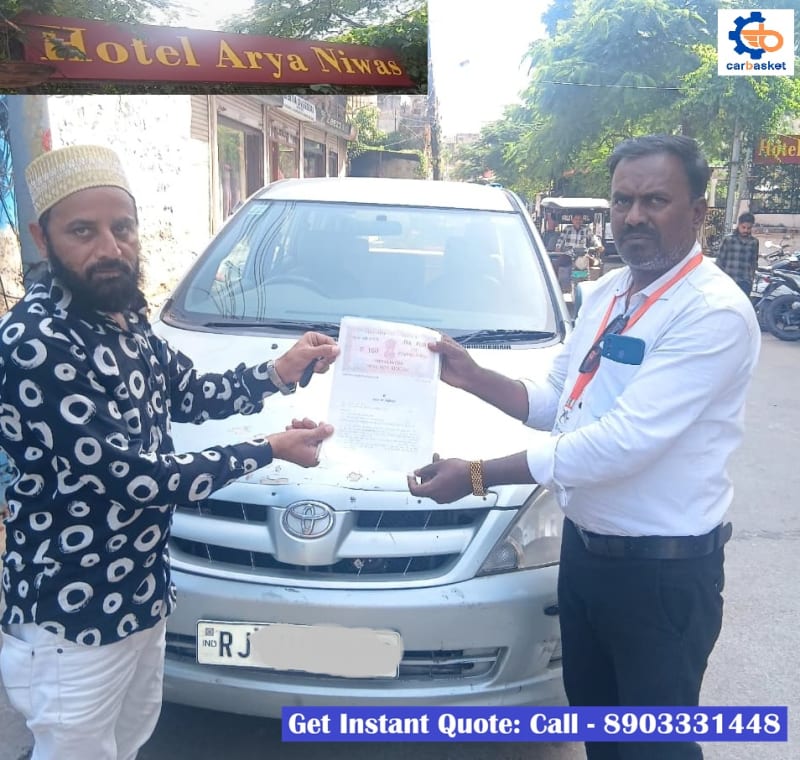
In this blog, we connect Jaipur’s story with a real scrappage case: Carbasket legally scrapped two vehicles belonging to Hotel Arya Niwas, Jaipur - Toyota Innova and Fiat Linea - through a compliance-first, clean recycling process.
1) Jaipur’s history: the world’s most famous “planned city” in North India
Jaipur was founded in 1727 by Sawai Jai Singh II as a planned capital (shifted from Amber), designed on a grid and influenced by classical Indian architectural principles. Wikipedia+1
The city’s “Pink City” identity became prominent after large areas were painted pink to welcome the Prince of Wales in 1876, a tradition that continues in many parts of the old city. Wikipedia
Why this matters for mobility: Jaipur’s walled city core was planned for walkable markets and animal-drawn movement. Today, it handles two-wheelers, cars, taxis, tourist buses, and goods movement - which naturally creates pressure on air quality and road space.
2) Jaipur division and administrative spread
Rajasthan’s administration includes 7 divisions, one of which is Jaipur Division. Wikipedia
Jaipur division broadly covers districts such as Jaipur, Alwar, Dausa, Jhunjhunu, Sikar and other reorganized/related district structures depending on administrative updates. Wikipedia+1
From a mobility and ELV perspective, this matters because vehicle flows are regional - Jaipur’s traffic is not only “Jaipur city vehicles,” but also vehicles from surrounding districts that enter for tourism, trade, education, and healthcare.
3) Hotel Arya Niwas, Jaipur: a heritage hospitality story with modern fleet needs
Hotel Arya Niwas is known as a family-run property that started welcoming guests with 20 rooms in 1983, growing with a strong reputation for warm hospitality. Arya Niwas
Like many Jaipur hotels, Arya Niwas depends on:
- airport/railway pickups,
- guest city tours,
- vendor movement,
- staff commutes and operations.
Over time, hotel fleets age - especially high-usage vehicles - and require a legal end-of-life plan.
4) The CarBasket case study: Scrapping Hotel Arya Niwas’ Innova & Fiat Linea in Jaipur
Vehicle 1: Toyota Innova (why hotels love it)
The Toyota Innova has been a workhorse in India’s people-mover segment. It was introduced in India in February 2005 (as a successor to Qualis). Wikipedia
For hospitality fleets, Innova’s strengths are simple:
- reliable long-distance running,
- comfortable 7/8-seater utility,
- strong service ecosystem,
- better uptime for daily guest operations.
Vehicle 2: Fiat Linea (a “solid sedan” era)
Fiat Linea is a compact sedan produced globally from 2006–2018, and it was manufactured in India at Fiat’s Ranjangaon facility. Wikipedia
In India, Linea was on sale from around 2009 onwards and received updates/facelifts later. CarWale
For hotels, sedans like Linea were often used for:
- executive guest transfers,
- city runs,
- staff/admin travel.
Why these vehicles needed scrappage (real-world reality)
Fleet vehicles reach end-of-life faster due to:
- high daily usage,
- escalating maintenance costs,
- compliance pressure (fitness/permits where applicable),
- brand image and safety expectations in hospitality.
What Carbasket ensured (the “right” end-of-life)
Carbasket’s approach is not “just scrap.” We start with legality, then move to clean recycling.
Compliance-first checklist
- Vehicle and RC verification
- Challan/blacklist check (risk control)
- Ownership and documentation validation
- RC de-registration guidance aligned to process norms
Then clean ELV processing
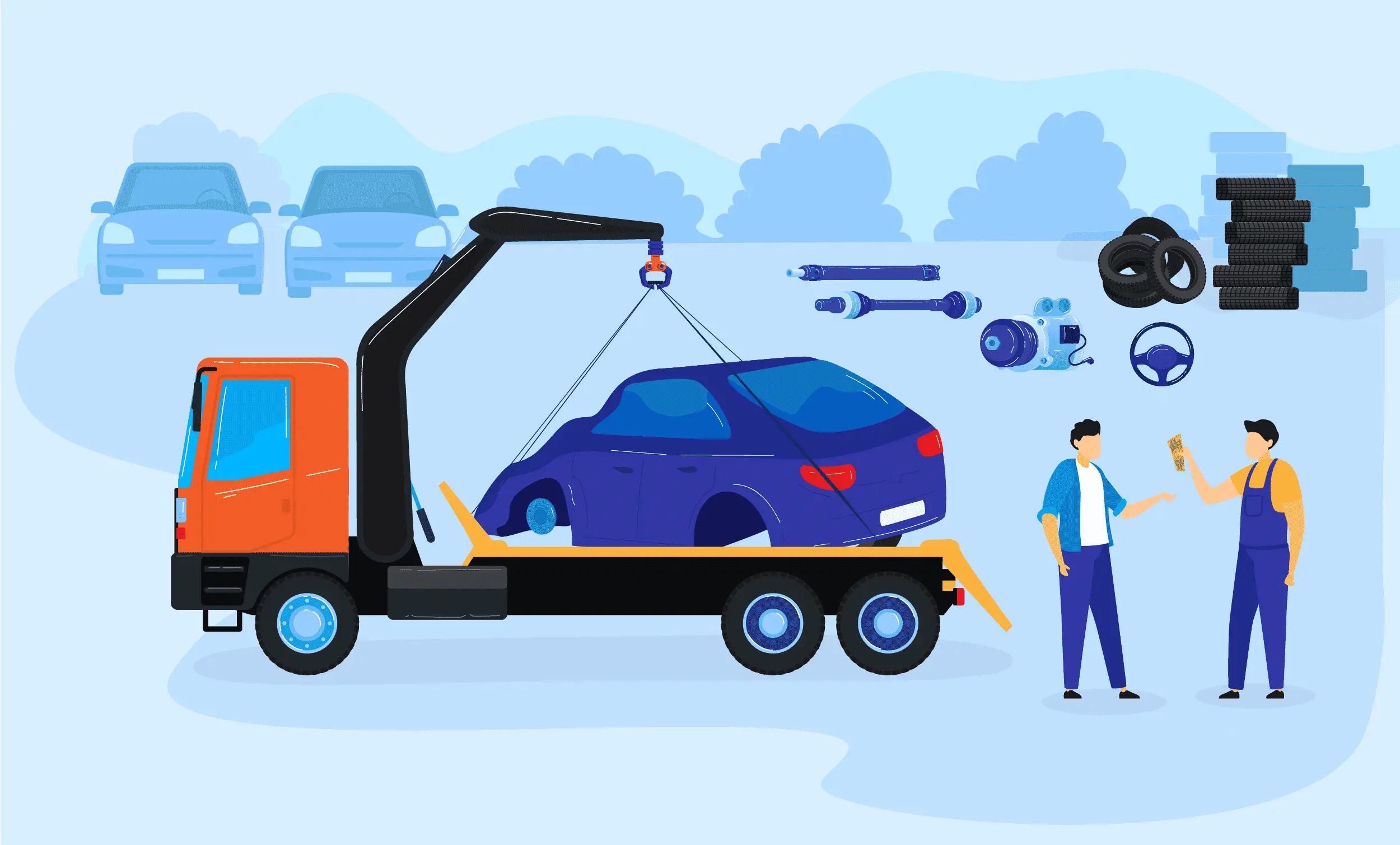
- De-pollution: battery, oils, coolant, fuel residues, and AC refrigerant handling via safe collection
- Dismantling: reusable parts identified and catalogued after checks
- Scrapping & segregation: metal, plastic, rubber separated for recycling streams
- Downstream recycling: material sent to authorised industrial chains as raw input; liquids to authorised processing/refining where applicable
This is how an ELV becomes resources—not roadside pollution.
5) Jaipur’s automobile reality: what sells fastest and who buys
Fastest-selling category (practical Jaipur trend)
In large Indian cities, two-wheelers typically dominate because they are affordable, easier to park, and faster in congestion. In Rajasthan overall, two-wheelers account for the largest share of registered vehicles (about 72.92% as of March 2022 in VAHAN data). Road Safety Web Portal
Strong demand segments in Jaipur
- Tourism & hospitality fleet operators (Innova/MPVs, sedans, buses, tempo travellers)
- Service-sector salaried commuters (two-wheelers + compact cars)
- Students & coaching ecosystem (two-wheelers, scooters)
- SMEs and traders (2W + goods carriers)
- App-based mobility & delivery (two-wheelers and compact cars)
6) How many vehicles are registered “till date” in Jaipur?
Publicly available “Jaipur city” vehicle totals vary by dataset and year. Two credible reference points you can cite:
- Registered motor vehicles: Jaipur city ~3,168.343 thousand (≈3.17 million) in 2020 (CEIC, city series). CEIC Data
- For context, Rajasthan vehicle population registered on VAHAN 4.0 was 1,71,74,784 (≈17.17 million) as on March 2022, with two-wheelers as the largest share. Road Safety Web Portal
If you want a “car-only” figure for Jaipur in million-plus city datasets, Jaipur’s car ownership has been reported at 235,310 in a data.gov.in-derived compilation. Maps of India+1
Blog tip: Publish the numbers with “as per available datasets” and year labels (2020 / 2022), and avoid claiming “live today” unless you pull directly from VAHAN dashboards.
7) Pollution level in Jaipur, CAIQ/AQI and why scrappage matters
Jaipur is listed among Rajasthan’s non-attainment cities in state-level air monitoring summaries, meaning it has struggled to meet air quality standards over time. Environment Portal
India’s NCAP monitoring and implementation tracking uses platforms such as CPCB’s PRANA portal. Prana
Current AQI snapshots (real-time dashboards): Jaipur’s AQI is frequently reported in “poor/very unhealthy” bands on popular live trackers. (These values change hourly.) AQI+1
Why ELVs matter: Older vehicles—especially poorly maintained fleet units—can emit higher pollution per km. Scrapping them legally and recycling cleanly is one of the fastest “system fixes” that also reduces unsafe vehicles on the road.
8) Government ELV action in Jaipur: what’s happening on ground
Rajasthan authorities have reported initiatives to target 15+ year commercial vehicles in Jaipur. One such report noted plans involving over 20,000 commercial vehicles older than 15 years (RTO-1) for action/scrappage/cancellation measures. The Times of India
This indicates a clear direction: age + compliance scrutiny is increasing, and fleet owners should plan exit pathways early.
9) MVI Act provisions owners should understand (simple, non-legal advice)
A key compliance concept in India is fitness - especially for transport/commercial vehicles.
Under Motor Vehicles Act Section 56, the certificate of fitness framework applies to transport vehicles and links directly to whether a vehicle can legally operate. India Code+1
Owner takeaway: When fitness/compliance becomes difficult - or when a vehicle is practically end-of-life - legal scrappage + record closure becomes the safest route.
10) Myths vs Facts (Jaipur edition)
Myth 1: “If I sell the old vehicle to a local dealer, I’m done.”
Fact: If RC status/ownership/closure isn’t handled properly, liability risks can remain with the last recorded owner.
Myth 2: “Scrapping means I’ll get only ‘kabaadi’ price.”
Fact: A professional process values the vehicle based on recoverable materials and transparent scrap logic, not informal bargaining.
Myth 3: “Hotels should keep old vehicles for backup.”
Fact: For hospitality brands, old vehicles can become a safety, compliance, guest-experience, and breakdown-risk problem. A planned exit is often cheaper than repeated repairs.
11) Why Carbasket for Jaipur: platform advantage for individuals and fleets
Carbasket is built for owners who want:
- legal confidence (checks + documentation),
- clean recycling (de-pollution + safe dismantling),
- speed and transparency (photo-based quick valuation, pickup workflow),
- proof-driven closure (scrappage confirmation trail).
For institutions like hotels, Carbasket adds:
- multi-vehicle handling,
- SOP-style documentation,
- accountability and reporting.
FAQ: Jaipur Vehicle Scrapping
1) Can hotels scrap multiple fleet vehicles at once in Jaipur?
Yes. Professional scrappage workflows can be executed vehicle-by-vehicle with documentation trails for each unit.
2) Why is Toyota Innova common in hotel fleets?
It’s a high-utility MPV; it launched in India in 2005 and became widely used for passenger movement and fleet operations. Wikipedia
3) What is Fiat Linea and why does it still appear in old fleets?
Fiat Linea is a compact sedan produced between 2006–2018 globally and made in India at Ranjangaon; many units remain in legacy fleets due to solid build and earlier purchase cycles. Wikipedia
4) How many vehicles are registered in Jaipur?
One city-level dataset reports ~3.17 million registered motor vehicles in Jaipur city in 2020. CEIC Data
5) Is Jaipur a high pollution city?
Jaipur is identified among Rajasthan’s non-attainment cities in air monitoring summaries and frequently shows poor AQI readings in live trackers. Environment Portal+2AQI+2
6) What legal concept matters most for old commercial vehicles?
Fitness certificate compliance under Motor Vehicles Act Section 56 is a key requirement for transport vehicles. India Code
7) Are there government drives to act on old commercial vehicles in Jaipur?
Reports have noted action plans involving 15+ year commercial vehicles in Jaipur, including a figure of 20,000+ vehicles in one such report. The Times of India
Scrap your vehicle legally with Carbasket (Jaipur).
Share vehicle photos → get a quick value → schedule pickup → complete compliant scrappage with documentation support.
Website: https: www.carbasket.in | WhatsApp: 89033 31448 / 94435 11500