The Maruti 800 was not just a car-it was a movement. It transformed Indian roads, empowered millions of families, and redefined affordability in the automotive sector. For an entire generation, owning a Maruti 800 was not about luxury-it was about dignity, independence, and progress.
Even today, its story mirrors India’s journey toward mobility, aspiration, and economic growth.
India Before the Maruti 800: A Car Was a Privilege
Before the 1980s, India’s car market was limited and outdated. The average citizen had only two choices:
- Hindustan Ambassador
- Premier Padmini (Fiat)
These cars were:
- Expensive
- Fuel-inefficient
- Technologically old
- Available after long waiting periods (sometimes years)
Owning a car was a status symbol reserved for politicians, senior bureaucrats, and industrialists.
The Vision Behind Maruti: A Car for the Common Indian
The dream of a “people’s car” began in the late 1970s. After several setbacks, the Indian government established Maruti Udyog Limited (MUL) in 1981.
To bring modern technology and global manufacturing standards, India partnered with Suzuki Motor Corporation of Japan—a decision that would permanently alter India’s automotive future.
Launch of the Maruti 800: A Historic Day (1983)
In December 1983, India witnessed a defining moment with the launch of the Maruti 800, based on the Suzuki Alto SS80.
Key Specifications at Launch:
- Model: Maruti 800 (SS80)
- Engine: 796cc, 3-cylinder petrol
- Transmission: Manual
- Fuel efficiency: Significantly higher than competitors
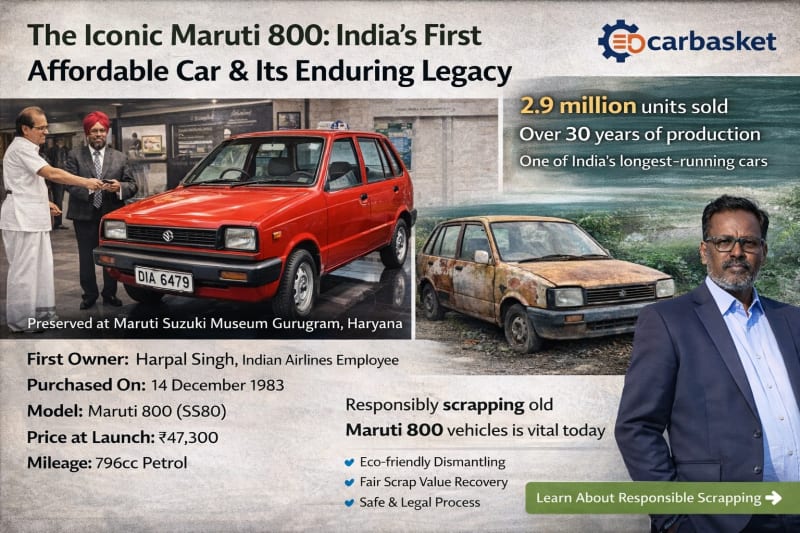
- Launch price: Approximately ₹47,500
This price point was revolutionary—it placed car ownership within reach of middle-class salaried Indians for the first time.
Who Bought India’s First Maruti 800?
The first Maruti 800 sold in India was delivered on 14 December 1983 to Mr. Harpal Singh, an employee of Indian Airlines, in New Delhi.
- Registration number: DIA 6479
- Delivery: Personally handed over by then Prime Minister Indira Gandhi
This moment symbolised the start of modern mass car ownership in India.
Where Is the First Maruti 800 Today?
The historic first Maruti 800 is preserved at the Maruti Suzuki Museum in Gurugram (Haryana). It stands today as a national automotive milestone—representing the birth of affordable mobility in India.
Why the Maruti 800 Became an Instant Success
1. Affordability
The Maruti 800 was priced lower than any modern car available at the time.
2. Fuel Efficiency
Its excellent mileage suited Indian road and fuel conditions.
3. Easy Maintenance
Spare parts were affordable, and Maruti rapidly expanded its service network.
4. Compact & Practical
Ideal for narrow Indian roads and first-time drivers.
Maruti 800 and the Indian Middle Class
The Maruti 800 quickly became:
- The first family car
- A wedding gift
- A retirement purchase
- A symbol of upward mobility
For millions, it marked the moment they “arrived” in life.
Evolution of the Maruti 800 Over the Years
Over three decades, the car evolved gradually:
- Carburettor engines to MPFI
- Improved interiors
- Better emissions compliance
- Minor design updates
Yet, its core philosophy—simplicity and affordability—never changed.
How Many Maruti 800 Cars Were Sold?
The numbers tell a historic story:
- Over 2.9 million units sold
- Manufactured for more than 30 years
- One of the longest-running car models in India
No other car influenced Indian mobility at this scale.
The Decline and Discontinuation
As India modernised, automotive regulations tightened:
- Stricter emission norms (BS-IV)
- Higher safety requirements
- Rising production costs
By 2014, continuing the Maruti 800 was no longer viable. Production officially ended, marking the close of an extraordinary chapter.
The Maruti 800 Today: Nostalgia Meets Reality
Even today:
- Thousands still exist across India
- Many lie unused or abandoned
- Maintenance has become difficult
- Emissions and safety no longer meet modern standards
While nostalgia keeps memories alive, ageing vehicles must be handled responsibly.
Responsible End-of-Life: The Role of Carbasket Vehicle Scrapping
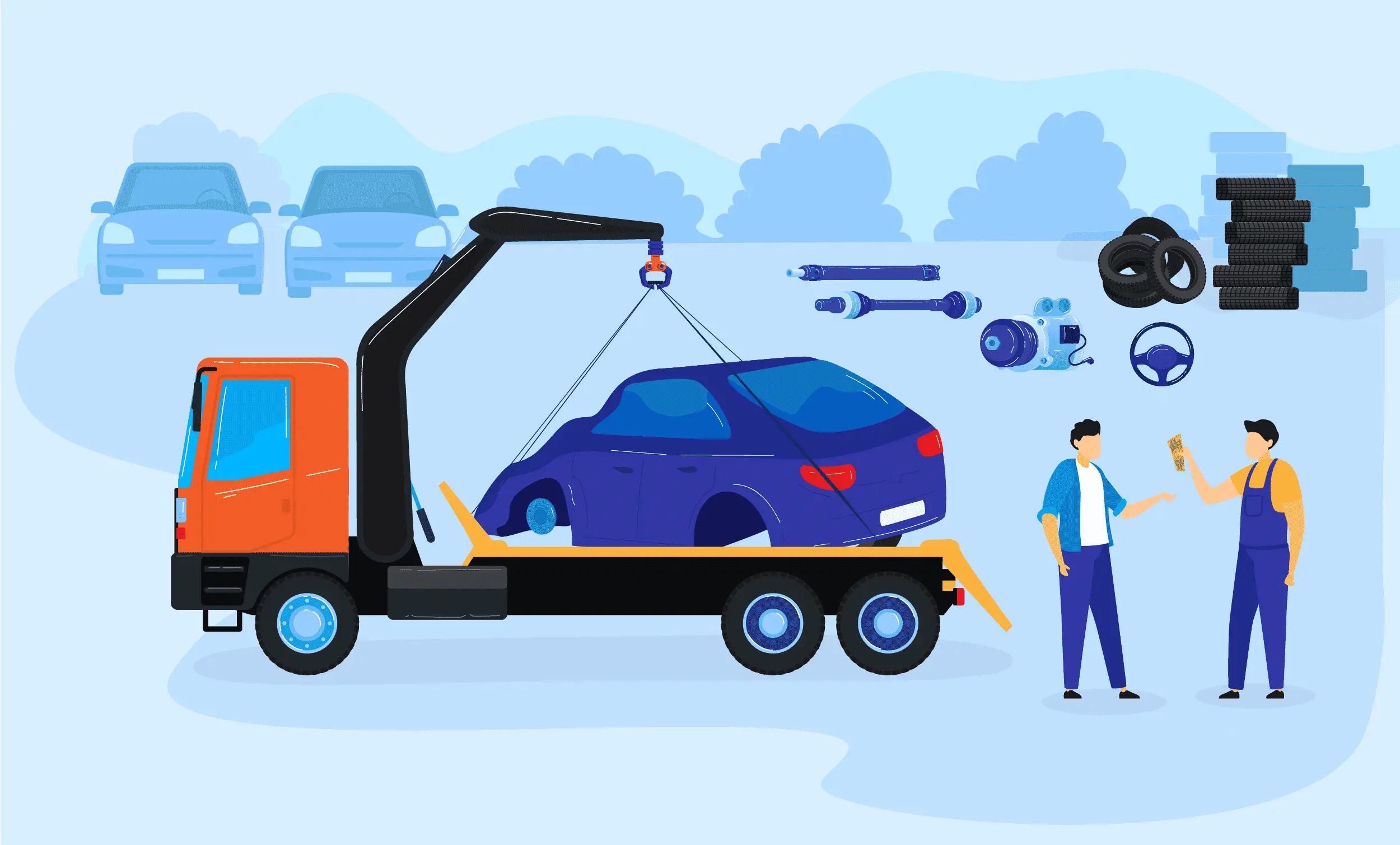
As iconic cars like the Maruti 800 reach the end of their usable life, responsible vehicle scrapping becomes essential.
Carbasket helps owners:
- Safely retire old vehicles
- Ensure eco-friendly dismantling
- Recover fair scrap value
- Prevent illegal reuse or abandonment
- Support India’s circular economy
Scrapping a Maruti 800 through authorised channels is not about discarding history—it is about closing a legendary journey responsibly.
Why Scrapping Old Vehicles Matters
Old vehicles:
- Emit higher pollutants
- Pose road safety risks
- Occupy public space when abandoned
- Create legal and environmental challenges
Organised scrapping ensures:
- Cleaner cities
- Resource recovery
- Reduced environmental impact
A Legacy That Will Never Fade
The Maruti 800 was not just India’s first affordable car—it was a symbol of aspiration, independence, and progress. From the first key handed to Harpal Singh in 1983 to millions of households across the nation, its legacy is deeply woven into India’s social fabric.
And as these cars complete their journey, Carbasket ensures that even their final chapter contributes positively—to sustainability, responsibility, and the future of mobility.
FAQs
Q: Who bought the first Maruti 800 in India?
Mr. Harpal Singh, an Indian Airlines employee.
Q: What was the price of Maruti 800 at launch?
Around ₹47,500 in 1983.
Q: How many Maruti 800 cars were sold?
Over 2.9 million units.
Q: Where is the first Maruti 800 now?
At the Maruti Suzuki Museum, Gurugram.
Q: Can Maruti 800 still be scrapped legally?
Yes, through authorised platforms like Carbasket.