India is stepping into a new era of intelligent highways. Near Kamrej, close to Surat in Gujarat, the country’s first Multi-Lane Free Flow (MLFF) digital toll plaza is set to begin operations. This technology-driven system will allow vehicles to pass through toll points without stopping, as toll charges are automatically deducted using FASTag and number plate recognition systems.
This marks a significant shift from traditional toll booths to barrier-free, high-speed digital tolling, aimed at reducing congestion, saving fuel, and improving overall travel efficiency across national highways.
What Is a Multi-Lane Free Flow Toll System?
The MLFF system eliminates physical toll booths and barriers. Instead, vehicles drive normally at highway speed while the system automatically detects and deducts toll fees using:
- FASTag RFID technology
- Automatic Number Plate Recognition (ANPR) cameras
- Digital vehicle tracking integration
The project at Kamrej near Surat is expected to become a model for future toll systems across India, especially on high-traffic national highways.
Why Kamrej, Surat?
Kamrej is a major highway junction connecting:
- Surat city
- Industrial corridors
- National highway networks
- Freight movement routes
The region sees:
- Heavy truck traffic
- Daily commuter movement
- Long-distance highway transit
Installing India’s first MLFF toll here will help test and refine a system designed for high-volume traffic environments.
How It Works: No Stop, No Delay
Under the new digital tolling system:
1️⃣ Vehicles approach the toll zone at normal speed
2️⃣ FASTag sensors automatically detect the vehicle
3️⃣ ANPR cameras read the number plate
4️⃣ Toll amount is deducted instantly
5️⃣ Vehicles continue driving without stopping
This creates a smooth, uninterrupted driving experience.
Major Benefits for Highway Users
🚗 Time Saving
No queues. No stopping. Faster travel time, especially during peak hours.
⛽ Fuel Saving
Vehicles no longer idle at toll booths, reducing fuel consumption.
🌍 Pollution Reduction
Less congestion means lower emissions and cleaner air.
📈 Traffic Efficiency
Freight and logistics movement becomes faster and more predictable.
Legal & Policy Alignment - Motor Vehicles Act Provisions
This digital tolling initiative aligns with the broader digital transport ecosystem encouraged under the Motor Vehicles Act, which promotes:
- Technology integration in road systems
- Digital vehicle identification
- Automated compliance tracking
- Efficient traffic management
Authorities can also use ANPR data for:
- Tracking violations
- Identifying uninsured vehicles
- Monitoring high-risk traffic patterns
This strengthens enforcement while improving mobility.
Myths vs Facts About Free Flow Tolling
❌ Myth 1: Toll will be charged even if you don’t pass the road
✔️ Fact: Charges apply only when your vehicle crosses the toll zone.
❌ Myth 2: FASTag alone is enough
✔️ Fact: Number plate scanning acts as a backup verification.
❌ Myth 3: You must slow down to get detected
✔️ Fact: System works at highway speeds.
❌ Myth 4: Cameras invade privacy
✔️ Fact: Data is used for transport regulation and toll management.
What Happens If FASTag Doesn’t Work?
If FASTag fails:
- Number plate recognition identifies the vehicle
- Toll charges may be billed later
- Penalties may apply for non-payment
This ensures revenue protection and compliance.
Impact on Freight, Logistics & Commercial Vehicles
For truck operators and fleet owners, this is a major upgrade:
- Reduced transit delays
- Better delivery schedules
- Lower fuel and driver idle time
- Improved national logistics efficiency
This supports India’s goal of becoming a faster and more competitive transport economy.
Environmental Angle: Less Congestion, Less Pollution
Free-flow tolling contributes to:
- Reduced carbon emissions
- Lower engine idling
- Smoother traffic patterns
It’s a step toward smart and green highways.
Where Carbasket Vehicle Scrapping Connects
Modern highway systems are designed for:
- Efficient traffic flow
- Safer vehicles
- Lower pollution
Old, unfit, and high-emission vehicles slow this progress.
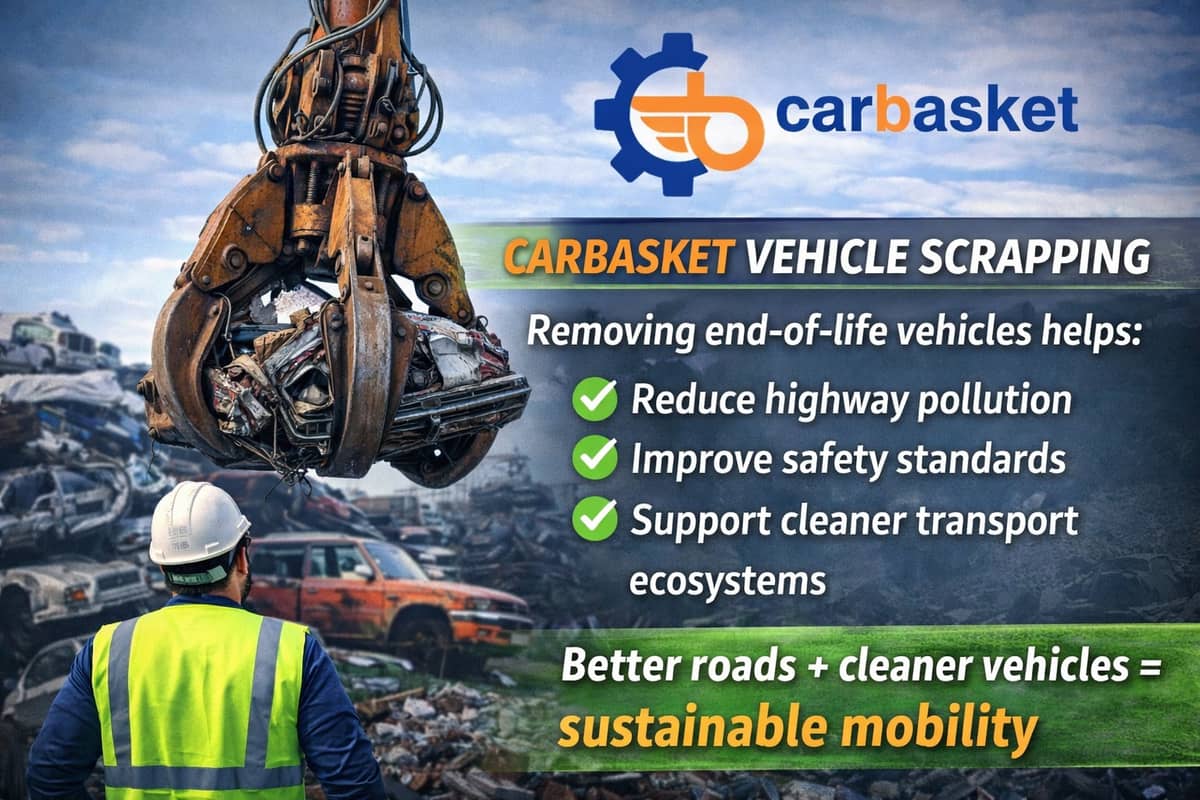
At Carbasket Vehicle Scrapping, removing end-of-life vehicles helps:
- Reduce highway pollution
- Improve safety standards
- Support cleaner transport ecosystems
Better roads + cleaner vehicles = sustainable mobility.
FAQs - Kamrej Digital Toll Plaza
Q1. Where is India’s first MLFF toll plaza located?
At Kamrej near Surat, Gujarat.
Q2. Will vehicles stop at this toll?
No. Vehicles will pass at normal speed.
Q3. How is toll collected?
Through FASTag and number plate scanning.
Q4. What if my FASTag has low balance?
You may face penalties or later billing.
Q5. Will this replace all toll plazas?
It may expand gradually across India.
Final Thought
The Kamrej MLFF toll system signals a major transformation in India’s highway infrastructure.
No barriers.
No waiting.
No wasted fuel.
Just smooth, intelligent, digital mobility.
As India builds smarter roads, the future will rely on:
- Technology-driven systems
- Cleaner vehicles
- Efficient transport networks
And that future has already begun at Kamrej.