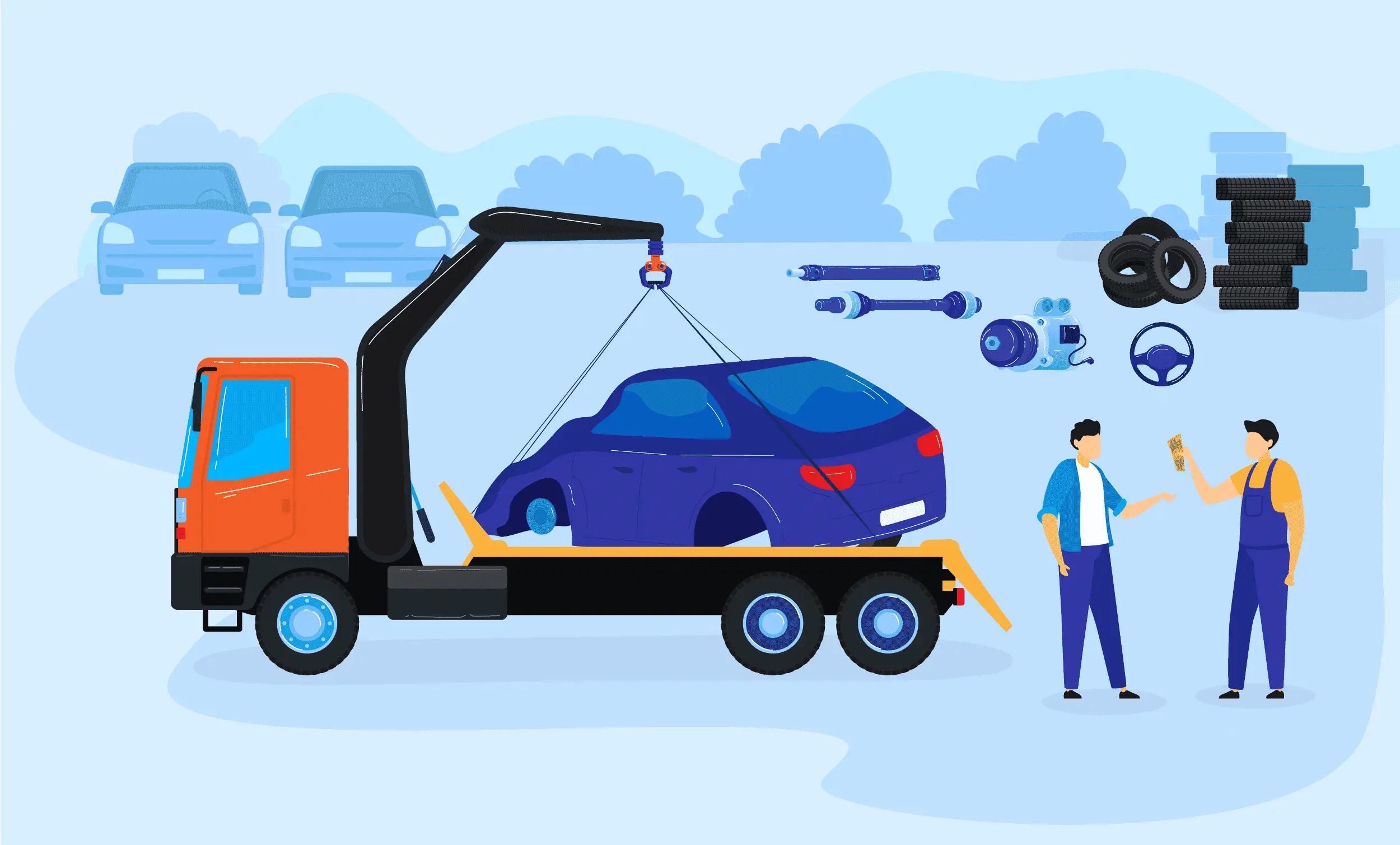
Many vehicle owners continue driving their cars even after the Registration Certificate (RC) has expired, believing that insurance or a Pollution Under Control (PUC) certificate is enough. However, driving a vehicle without a valid registration is a violation of Indian motor vehicle laws and can result in significant penalties.
If your vehicle has crossed its registration validity and has not been renewed or is no longer eligible for renewal, you should avoid using it on public roads. Instead, consider legal options such as renewal (where permissible) or responsible scrapping if the vehicle has reached the end of its service life.
What Does the Law Say?
Under the Motor Vehicles Act, 1988:
Section 39 – Registration is Mandatory
Section 39 states that no motor vehicle shall be driven or permitted to be driven in any public place unless it is registered in accordance with the law.
In simple terms:
- Every vehicle must have a valid Registration Certificate (RC).
- An expired or invalid registration means the vehicle is not legally permitted to be driven on public roads.
Section 192 – Penalty for Using an Unregistered Vehicle
If a vehicle is used in violation of the registration requirement, Section 192 prescribes penalties.
First Offence
The penalty may include:
- Fine of not less than ₹2,000 and up to ₹5,000.
Second or Subsequent Offence
The law provides for:
- Imprisonment up to one year, or
- Fine ranging from ₹5,000 to ₹10,000, or
- Both imprisonment and fine.
The actual enforcement outcome depends on the facts of each case and the applicable legal provisions.
What Happens If You Continue Driving an Expired RC Vehicle?
Apart from monetary penalties, authorities may take additional enforcement actions depending on the circumstances.
These may include:
- Court challan
- Vehicle detention
- Vehicle impounding or seizure
- Prosecution under applicable provisions
- Restrictions on further use of the vehicle
Continuing to operate an expired RC vehicle can also create complications with insurance claims and legal compliance.
Special Enforcement in Delhi-NCR
Vehicle owners in Delhi-NCR should be particularly cautious.
The Delhi Traffic Police separately identifies the operation of old petrol and diesel vehicles beyond the applicable age limits as a court challan matter under Sections 39, 192, and 207 of the Motor Vehicles Act.
Generally:
- Petrol vehicles beyond the applicable 15-year limit and
- Diesel vehicles beyond the applicable 10-year limit
may face stricter enforcement in accordance with prevailing court directions and government notifications.
In addition to penalties, such vehicles may also face impounding or other enforcement action, particularly where End-of-Life Vehicle (EOL) regulations apply.
Why Driving an Expired RC Vehicle is Risky
Using a vehicle without valid registration may lead to several consequences:
- Financial penalties
- Legal proceedings
- Court appearance
- Vehicle impoundment
- Insurance claim complications
- Difficulty transferring ownership
- Reduced resale value
- Environmental compliance issues
Ignoring registration expiry can ultimately cost far more than taking timely corrective action.
What Should You Do If Your RC Has Expired?
The appropriate course of action depends on your vehicle's condition and eligibility.
If Renewal is Permitted
You may apply for renewal in accordance with the applicable transport authority's requirements.
If the Vehicle Has Reached End-of-Life
If renewal is not possible or the vehicle has become uneconomical to maintain, responsible vehicle scrapping is often the most practical solution.
How Carbasket Can Help
Carbasket assists vehicle owners in responsibly managing End-of-Life Vehicles (ELVs).
Our services include:
- Vehicle assessment
- Transparent valuation
- Doorstep pickup assistance
- Support for non-running vehicles
- Commercial vehicle scrapping
- Fleet disposal
- Eco-friendly recycling
- Documentation guidance
- Pan-India vehicle scrapping assistance
We help simplify the process of retiring old vehicles while promoting environmentally responsible recycling.
Benefits of Scrapping an End-of-Life Vehicle
Choosing organized vehicle scrapping offers several advantages:
- Avoid future legal liabilities
- Free up parking space
- Recover value from your old vehicle
- Reduce maintenance costs
- Prevent environmental pollution
- Support responsible recycling
- Contribute to India's circular economy
Vehicles Accepted by Carbasket
Carbasket facilitates scrapping for:
- Hatchbacks
- Sedans
- SUVs
- Luxury Cars
- Motorcycles
- Scooters
- Auto Rickshaws
- Pickup Trucks
- Commercial Vehicles
- Buses
- Electric Vehicles (EVs)
- Tractors
- Construction Equipment
- Fleet Vehicles
Vehicles may be assessed in running, non-running, accident-damaged, flood-damaged, fire-damaged, or End-of-Life condition.
Documents Commonly Required for Vehicle Scrapping
Depending on the case, you may generally require:
- Registration Certificate (RC)
- Government-issued ID proof
- Address proof
- PAN Card (where applicable)
- Loan closure documents (if financed)
- Form 35 (if applicable)
- Supporting ownership documents where required
If the RC is lost or damaged, Carbasket can review alternative ownership documents, subject to verification and applicable regulations.
Why Choose Carbasket?
Carbasket is committed to making vehicle scrapping:
- Transparent
- Convenient
- Environmentally responsible
- Customer-friendly
- Legally compliant
With services across multiple Indian states, Carbasket helps individuals, businesses, and fleet owners responsibly retire End-of-Life Vehicles.
Conclusion
Driving a vehicle with an expired Registration Certificate is not just a paperwork issue—it can result in substantial fines, legal proceedings, and even vehicle impoundment under the Motor Vehicles Act. In Delhi-NCR, enforcement is particularly strict for End-of-Life petrol and diesel vehicles that exceed the applicable age limits.
If your vehicle has reached the end of its legal or practical life, don't risk penalties by continuing to drive it. Carbasket provides a trusted, transparent, and environmentally responsible solution for scrapping old vehicles, helping you retire your vehicle legally while contributing to a cleaner and greener India.
Disclaimer: This article is intended for general informational purposes only and is not legal advice. Enforcement practices and applicable rules may vary by state and may change over time. Always refer to the latest notifications issued by the relevant Transport Department or seek professional legal advice for your specific situation.
Frequently Asked Questions (FAQs)
1. Can I drive a vehicle after its RC expires?
No. A vehicle should not be driven on public roads without a valid registration, as this may violate the Motor Vehicles Act.
2. What is the fine for driving with an expired RC?
For a first offence under Section 192, the law provides a fine of not less than ₹2,000 and up to ₹5,000.
3. What happens for repeated violations?
For a second or subsequent offence, the law provides for imprisonment up to one year, or a fine between ₹5,000 and ₹10,000, or both.
4. Can my vehicle be impounded?
Yes. Depending on the circumstances and applicable enforcement provisions, authorities may detain or impound the vehicle.
5. Are the rules stricter in Delhi-NCR?
Yes. Delhi-NCR has stricter enforcement for End-of-Life petrol and diesel vehicles in line with applicable court directions and government notifications.
6. Can I renew an expired RC?
Renewal depends on the age of the vehicle, applicable laws, and the outcome of the required fitness or registration process.
7. What if my vehicle is too old to renew?
If renewal is not permitted, scrapping the vehicle through an organized vehicle recycling company is generally the appropriate option.
8. Does Carbasket assist with old vehicle scrapping?
Yes. Carbasket provides vehicle assessment, pickup assistance, transparent valuation, documentation guidance, and environmentally responsible recycling.
9. Can non-running vehicles be scrapped?
Yes. Carbasket assists with running and non-running vehicles, subject to service availability.
10. Does Carbasket provide services across India?
Yes. Carbasket offers vehicle scrapping assistance through its expanding pan-India service network.