The Hidden Giant of India’s Air Pollution Crisis
Trucks account for only 3% of India’s total registered vehicles, yet they contribute a staggering 53% of total particulate matter (PM) emissions nationwide.
According to a report by the Indian Institute of Management Bangalore, heavy-duty freight vehicles are disproportionately responsible for India’s worsening air quality crisis. Despite their small share in vehicle population, their environmental footprint is massive.
This imbalance exposes a serious structural issue in India’s transportation ecosystem.
📊 Why Do Trucks Pollute So Much?
1️⃣ Diesel Dependency
Most heavy-duty trucks in India run on diesel engines, which emit higher levels of:
- PM2.5 & PM10
- Nitrogen Oxides (NOx)
- Carbon Monoxide (CO)
- Black Carbon
Diesel combustion produces fine particulate matter that penetrates deep into lungs and bloodstream.
2️⃣ Older Fleet Composition
A large portion of India’s truck fleet consists of:
- BS-III and BS-IV vehicles
- Poorly maintained engines
- Long-operating commercial vehicles
Older trucks lack modern emission control technologies such as:
- Diesel Particulate Filters (DPF)
- Advanced catalytic converters
3️⃣ Long-Distance Operations
Unlike private cars, freight trucks:
- Operate continuously for long hours
- Travel across states
- Cover thousands of kilometers monthly
Higher usage = Higher emissions output.
4️⃣ Overloading & Poor Maintenance
Overloaded trucks consume more fuel and release more pollutants.
Irregular servicing increases exhaust toxicity.
The Impact on Urban India
Major cities like Delhi, Mumbai, Bengaluru, and Chennai experience severe air pollution partly due to freight corridors and logistics hubs.
Particulate Matter (PM2.5) exposure leads to:
- Respiratory diseases
- Cardiovascular problems
- Reduced life expectancy
- Increased healthcare burden
Freight transport emissions directly affect urban health outcomes.
🚛 The Urgent Need for Freight Sector Transformation
If India wants to achieve:
- Cleaner air
- Net-zero targets
- Sustainable urban mobility
Then reforming the freight transport sector is essential.
🔄 Solutions for Reducing Truck Emissions
✅ 1. Fleet Modernization
Scrapping old diesel trucks and replacing them with:
- BS-VI compliant vehicles
- LNG trucks
- Electric heavy-duty vehicles
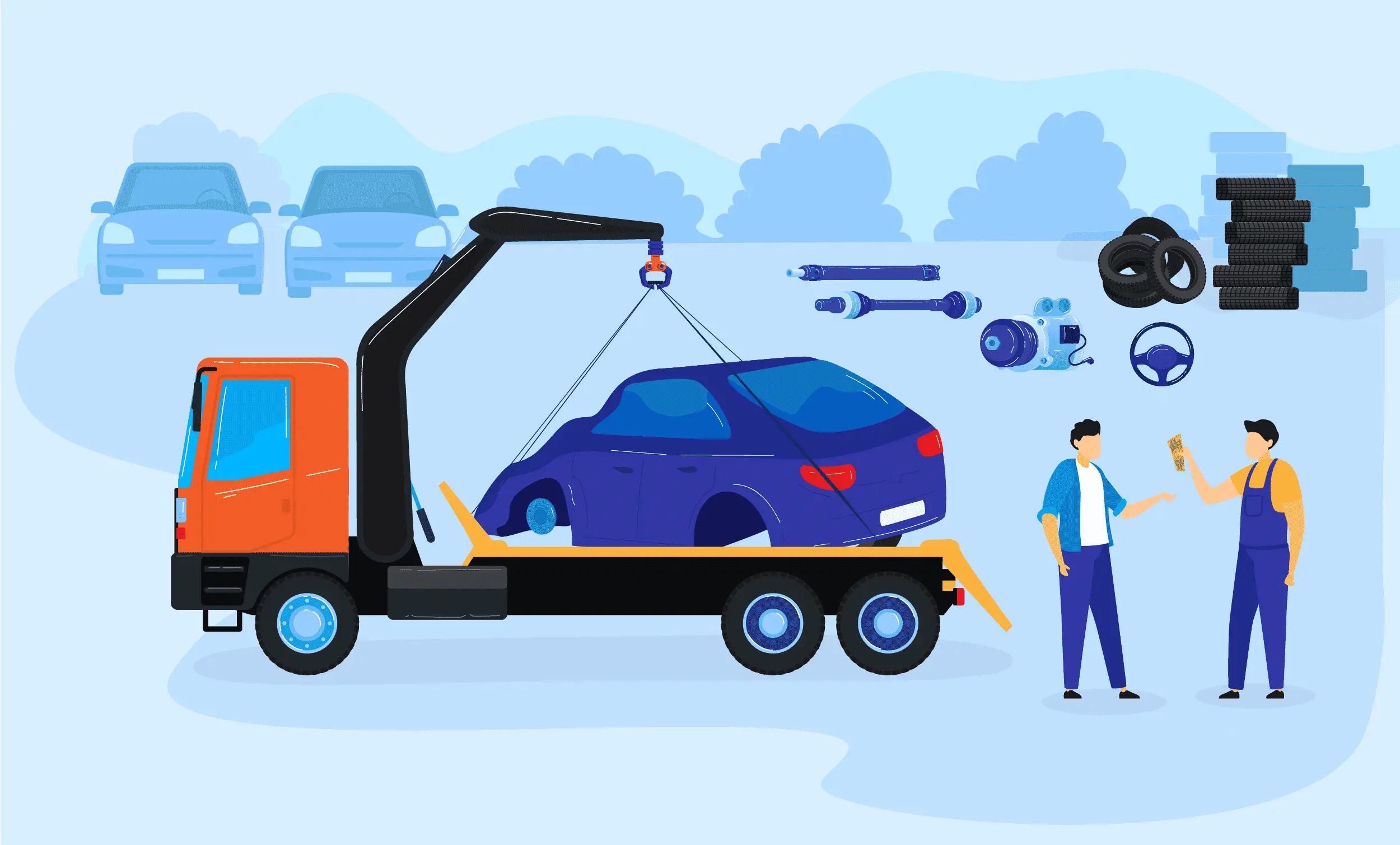
This is where organized vehicle scrapping systems become critical.
✅ 2. Electric & LNG Truck Adoption
Electric trucks significantly reduce tailpipe emissions.
LNG trucks produce lower PM and NOx emissions than diesel.
✅ 3. Stricter Emission Standards
Implementation of:
- Real-world emission testing
- Mandatory scrappage for outdated vehicles
- Incentives for clean freight transition
✅ 4. Improved Logistics Efficiency
Optimized supply chains reduce:
- Empty return trips
- Fuel consumption
- Congestion-based emissions
Digital freight matching and route optimization can reduce pollution significantly.
♻️ The Role of Vehicle Scrapping in Pollution Control
Scientific vehicle scrapping plays a vital role in:
- Removing high-polluting old trucks
- Recycling metal sustainably
- Preventing illegal resale of end-of-life vehicles
Modern Registered Vehicle Scrapping Facilities (RVSF) ensure:
- Safe dismantling
- Hazardous waste control
- Compliance with environmental norms
Transitioning away from aging diesel fleets is impossible without responsible scrapping infrastructure.
📌 Key Takeaway
India’s air pollution crisis cannot be solved by focusing only on private cars.
Though trucks represent just 3% of vehicles, their 53% contribution to particulate emissions demands urgent policy, technological, and structural reform.
Transforming freight transport is not optional — it is essential for India’s environmental future.
❓ Frequently Asked Questions (FAQs)
Q1: Why do trucks contribute more pollution than cars?
Because heavy-duty diesel engines emit more particulate matter and operate for longer distances.
Q2: What is PM2.5 and why is it dangerous?
PM2.5 refers to fine particulate matter smaller than 2.5 microns that can enter lungs and bloodstream, causing serious health issues.
Q3: How can India reduce truck emissions?
By adopting electric/LNG trucks, enforcing stricter norms, scrapping old vehicles, and improving logistics efficiency.
Q4: Are electric trucks viable in India?
Yes, especially for short-haul and urban freight operations. Infrastructure development is ongoing.
Q5: What role does vehicle scrapping play in pollution control?
Scrapping removes high-polluting old vehicles and ensures responsible recycling under regulated conditions.