When it comes to vehicle scrapping, condition matters more than most owners realise.
The overall state of your vehicle - including rust levels, physical wear, and mechanical performance - is a key factor in determining how much value it holds at the end of its life.
At Carbasket, scrap valuation is not guesswork. It is a structured assessment based on material recovery potential, safety, and environmental responsibility.
Understanding how your vehicle’s condition impacts its scrap value helps you:
- Set realistic expectations
- Avoid disputes
- Receive fair and transparent pricing
Why Vehicle Condition Matters in Scrapping
Unlike resale, scrapping is not about brand appeal or aesthetics.
It is about what can be safely recovered and recycled.
The better the condition of key components, the higher the recovery efficiency—and the better the value.
Vehicle condition affects:
- Recoverable metal weight
- Reusability of components
- Dismantling effort and safety
- Environmental handling costs
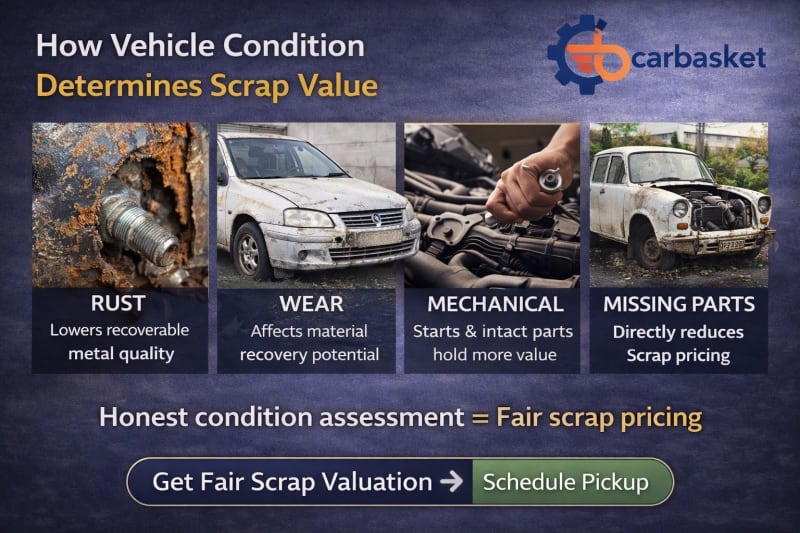
1. Rust: The Silent Value Killer
How Rust Impacts Scrap Value
Rust directly affects the quality and quantity of recyclable metal.
- Severe rust weakens structural steel
- Corroded parts reduce usable metal yield
- Rust-contaminated components require extra processing
Vehicles exposed to:
- Coastal air
- Flooding
- Long-term outdoor parking
often suffer advanced corrosion, lowering scrap value.
Carbasket’s Approach to Rusted Vehicles
Carbasket still accepts heavily rusted vehicles, but:
- Valuation reflects actual recoverable material
- Unsafe structures are handled with additional safety measures
- Environmentally harmful residue is managed responsibly
2. Wear and Tear: What Still Holds Value?
Common Wear Indicators
Wear accumulates naturally over time and affects:
- Body panels
- Suspension components
- Interior fittings
- Electrical wiring
While worn interiors may not impact scrap value much, structural and mechanical wear does.
What Wear Still Has Value?
Even worn vehicles contain valuable materials such as:
- Steel and iron
- Aluminium parts
- Copper wiring
- Lead from batteries
- Rubber and plastics (in controlled recycling)
Carbasket evaluates material recovery, not cosmetic condition.
3. Mechanical Performance: Running vs Non-Running Vehicles
Does a Running Vehicle Have Higher Scrap Value?
Yes, in many cases.
A vehicle that:
- Starts and moves
- Has an intact engine and transmission
- Contains major assemblies
often holds better recovery potential.
However, non-running vehicles still have value, especially when:
- Major parts are intact
- Engine and gearbox are present
- Chassis structure is recoverable
Carbasket Handles Both Equally Professionally
Whether your vehicle is:
- Fully functional
- Partially damaged
- Completely non-running
Carbasket arranges proper pickup and fair valuation.
4. Missing Parts and Their Impact on Value
Missing components directly affect scrap pricing.
Major parts that influence value include:
- Engine
- Gearbox
- Catalytic converter
- Wheels
- Battery
👉 Declaring missing parts upfront ensures:
- Accurate price estimation
- No last-minute reductions
- Faster pickup and processing
Transparency protects both the customer and the recycler.
5. Vehicle Age and Maintenance History
Older vehicles generally:
- Have higher wear
- Show more corrosion
- Contain outdated materials
However, well-maintained older vehicles may still:
- Offer better metal quality
- Be easier to dismantle safely
Carbasket considers actual condition, not just age.
How Carbasket Evaluates Vehicle Condition
Carbasket follows a structured assessment process:
- Vehicle type and category
- Physical condition (rust, damage)
- Mechanical status
- Presence of major components
- Accessibility for pickup
- Environmental handling requirements
This ensures fair, consistent, and transparent pricing.
Why Honest Disclosure Matters
Attempting to hide:
- Rust damage
- Missing parts
- Mechanical failure
often leads to:
- Pickup delays
- Revaluation
- Disputes
Carbasket’s model is built on trust and clarity, ensuring smooth scrapping from start to finish.
Environmental Responsibility & Condition-Based Scrapping
Vehicle condition also impacts environmental risk:
- Leaking fluids
- Corroded fuel systems
- Battery deterioration
Carbasket ensures:
- Proper depollution
- Safe dismantling
- Responsible recycling of all materials
FAQs - Vehicle Condition & Scrap Value
How does rust affect scrap value?
Rust reduces recoverable metal quality and may lower the scrap value, especially if structural parts are heavily corroded.
Can a non-running vehicle still be scrapped?
Yes. Non-running vehicles still contain valuable recyclable materials and are accepted by Carbasket.
Do missing parts reduce scrap value?
Yes. Missing major components directly reduce material recovery potential and impact pricing.
Does interior condition matter for scrapping?
Interior wear has minimal impact compared to structural and mechanical condition.
Will Carbasket pick up heavily damaged vehicles?
Yes. Carbasket arranges pickup for damaged, abandoned, and non-running vehicles, subject to accessibility.
Is scrap value decided before pickup?
An estimated value is shared upfront, and final value is confirmed based on declared condition.