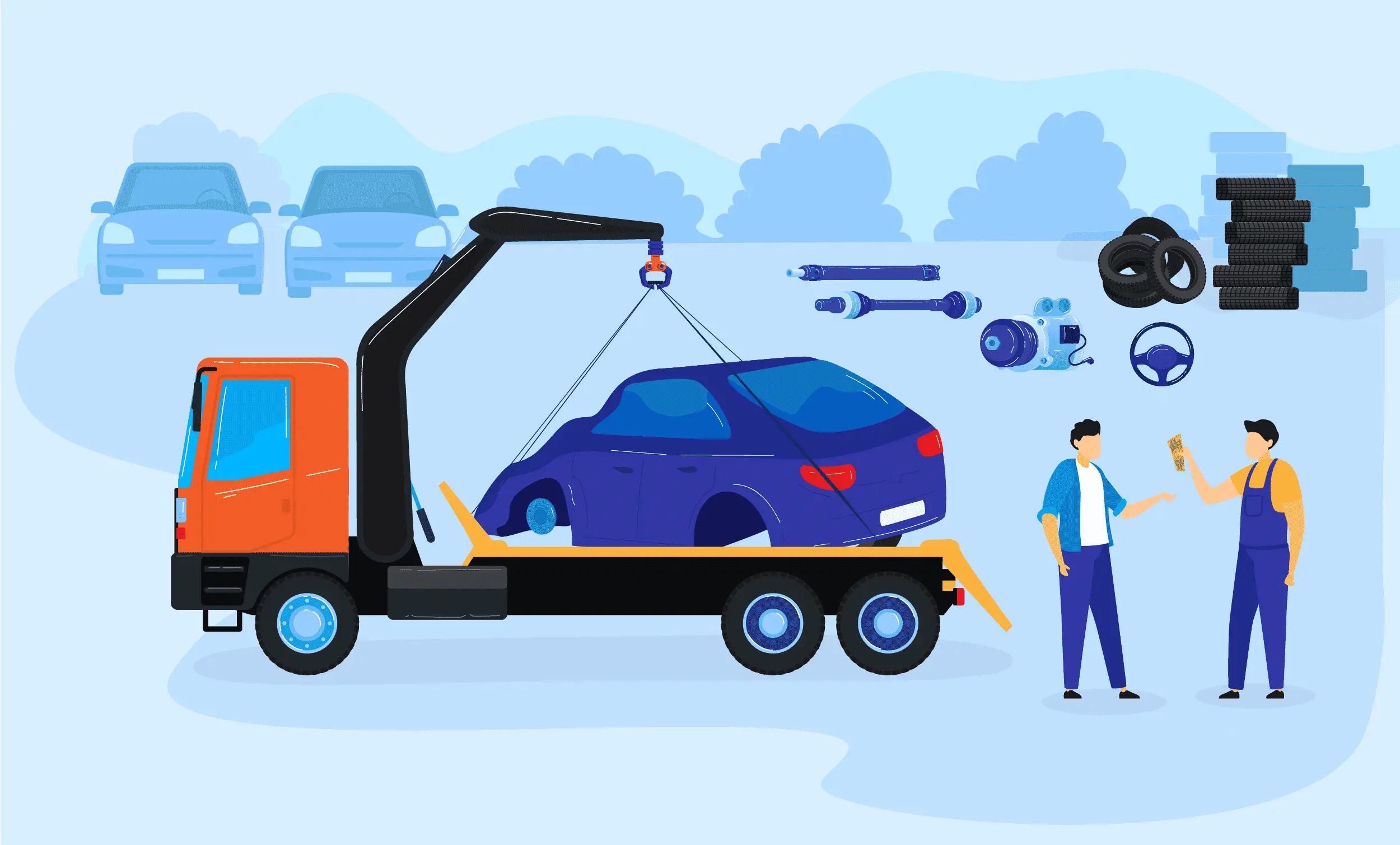
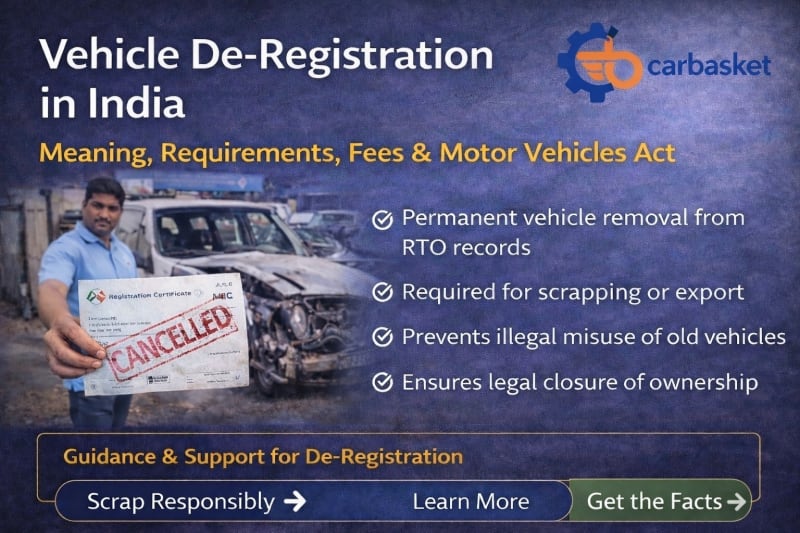
Vehicle ownership in India does not end when a car or bike stops running.
Legally, a vehicle remains active on government records until it is officially de-registered.
Vehicle de-registration is the formal process of removing a vehicle from the PARIVAHAN / Concern RTO database, ensuring it can no longer be:
- Driven on public roads
- Transferred or misused
- Linked to future liabilities
This process becomes critical during scrapping, permanent export, or irreversible damage.
What Is Vehicle De-Registration?
Vehicle de-registration is the legal cancellation of a vehicle’s registration number by the Regional Transport Office (RTO).
Once de-registered:
- The vehicle legally ceases to exist on Indian roads
- Ownership responsibilities end
- The registration number cannot be reused
- The vehicle cannot be re-registered again (in most cases)
De-registration protects owners from future legal, financial, and criminal liabilities.
Why Is Vehicle De-Registration Required?
1. Legal Closure of Ownership
Even a scrap vehicle can attract:
- Traffic violations
- Criminal misuse
- Environmental penalties
De-registration ensures the owner is legally cleared.
2. Mandatory for Vehicle Scrapping
Under government rules, vehicles sent for authorised scrapping must be:
- Permanently de-registered
- Removed from VAHAN records
Without de-registration, scrapping is considered incomplete.
3. Prevents Illegal Reuse
De-registration ensures:
- Chassis numbers aren’t reused
- Vehicles don’t reappear in illegal markets
- RC misuse is prevented
4. Compliance with Motor Vehicle Act
The Motor Vehicles Act mandates removal of unfit, end-of-life vehicles from circulation.
When Is Vehicle De-Registration Required?
Vehicle de-registration is required in cases such as:
- End-of-life vehicle scrapping
- Permanent export outside India
- Total loss due to accident or fire
- Vehicles declared unfit by RTO
- Voluntary surrender by owner
Types of Vehicle De-Registration in India
1. Permanent De-Registration (Scrapping)
This is the most common type.
Applicable when:
- Vehicle is scrapped
- Vehicle is beyond repair
- Vehicle has failed fitness tests
Once done, the vehicle cannot be registered again.
2. De-Registration for Export
Used when:
- Vehicle is permanently exported abroad
In this case:
- Indian registration is cancelled
- Export documentation is required
3. De-Registration Due to Total Loss
Applied when:
- Vehicle is destroyed in accident, flood, or fire
- Insurance declares total loss
Supporting insurance documents are required.
4. Voluntary De-Registration
Rare but applicable when:
- Owner voluntarily surrenders the vehicle permanently
Provisions Under the Motor Vehicles Act
Vehicle de-registration is governed under:
- Motor Vehicles Act, 1988
- Central Motor Vehicle Rules (CMVR)
- National Vehicle Scrappage Policy
Key legal provisions include:
- Mandatory removal of unfit vehicles
- Authorised dismantling requirements
- RC cancellation procedures
- Fitness expiry consequences
These provisions aim to:
- Improve road safety
- Reduce pollution
- Promote formal recycling
Fitness Expiry & De-Registration Link
- Private vehicles: Fitness after 15 years
- Commercial vehicles: Fitness after 8 years
If a vehicle:
- Fails fitness test
- Is not renewed
It becomes eligible for scrapping and de-registration.
Fees for Vehicle De-Registration
De-registration fees vary by state and situation, but typically include:
Fee Type Approximate Range
RC cancellation processing ₹100 – ₹500
Fitness test (if required) ₹600 – ₹1,000
Penalty (if delayed) Variable
Scrapping-related charges As applicable
👉 Many costs are avoided when vehicles are scrapped on time through authorised channels.
Documents Required for De-Registration
Commonly required documents include:
- Original RC
- Owner ID proof
- Vehicle scrapping certificate (where applicable)
- Insurance papers (for total loss)
- NOC (if hypothecated)
- Affidavit or undertaking (case-specific)
Requirements may vary depending on the case.
Risks of Not De-Registering a Vehicle
Failing to de-register can lead to:
- Traffic challans on old number
- Legal notices
- Criminal misuse liability
- Pollution penalties
- Ownership disputes
Many vehicle owners face issues years after abandoning a vehicle.
How Carbasket Helps with Vehicle De-Registration
1. Guidance on Eligibility
Carbasket helps determine:
- Whether de-registration is required
- Type of de-registration applicable
2. Authorised Scrapping Support
Vehicles scrapped through Carbasket:
- Follow government-recognised processes
- Are dismantled responsibly
- Are not reused illegally
3. Documentation Assistance
Carbasket guides owners on:
- Required documents
- Scrapping certificates
- Compliance steps
4. Peace of Mind
Owners can be confident that:
- Vehicles are removed legally
- Environmental norms are followed
- Ownership risks are closed
Vehicle De-Registration & Circular Economy
De-registration is not just legal compliance.
It supports:
- Cleaner roads
- Safe recycling
- Resource recovery
- Reduced pollution
Carbasket plays a role in converting old vehicles into reusable materials safely.
FAQs - Vehicle De-Registration in India
Is vehicle de-registration mandatory for scrapping?
Yes. Scrapping is legally complete only after de-registration.
Can a de-registered vehicle be re-registered?
Generally, no-especially in cases of scrapping.
What happens if I abandon a vehicle without de-registering?
You may still be held legally responsible for future issues.
Is there a penalty for late de-registration?
Yes, penalties may apply depending on state rules.
Does Carbasket handle de-registration?
Carbasket provides guidance and support as part of the scrapping process.
Is de-registration required for non-running vehicles?
Yes, if the vehicle is permanently removed from use.