Every vehicle operating on Indian roads — from a small scooter to a commercial truck — must legally be registered with the Regional Transport Office (RTO). The Registration Certificate (RC) is not just a piece of paper; it is the official identity of your vehicle.
But with time, ownership rules, fitness norms, environmental policies, and scrapping regulations have evolved significantly. Today, Indian vehicle owners must understand:
- What documents are required for vehicle registration
- Different types of registration
- State-wise fees & taxes
- RC expiry rules
- The 15-year renewal requirement
- Higher fitness charges for older vehicles
- Green tax implementation
- Legal penalties
- RC cancellation rules
- Vehicle scrapping procedure
This is the most detailed guide you will find online — created by CarBasket to help every vehicle owner understand their rights & responsibilities clearly.
What Is Vehicle Registration and Why Is It Important?
Vehicle Registration is the process through which the government officially records:
- Ownership
- Vehicle identity
- Technical details
- Roadworthiness
- Compliance with Motor Vehicles Act
Once registered, the vehicle receives:
- Registration Certificate (RC)
- Registration Number (Number Plate)
A valid RC ensures:
✔ Legal right to drive on public roads
✔ Vehicle ownership proof
✔ Insurance validity
✔ Road tax compliance
✔ Eligibility for resale
✔ Mandatory requirement during scrapping
Without a valid RC, a vehicle is considered illegal and unregistered, even if it was once registered.
Complete List of Documents Required for Vehicle Registration in India
Below is the most comprehensive checklist used across all RTOs in India.
Mandatory Forms & Certificates
1. Form 20 – Application for Registration
The main registration request form.
2. Form 21 – Sale Certificate
Issued by the dealer confirming the sale.
3. Form 22 – Roadworthiness Certificate
Issued by the manufacturer. Confirms:
- Emission compliance
- Safety standards
- Technical fitness
4. Temporary Registration Certificate (TR)
Valid for 30 days from purchase.
Owner Identity Documents
5. Valid ID Proof (Any one)
- Aadhaar
- PAN
- Passport
- Voter ID
- Driving Licence
6. Address Proof (Any one)
- Aadhaar
- Electricity Bill
- Water Bill
- Passport
- Rent Agreement
- Property Tax Receipts
Vehicle-related Documents
7. Valid Insurance Policy
Mandatory 3rd party insurance at minimum.
8. Pollution Under Control Certificate (PUC)
Required during renewal or as demanded by state.
9. Road Tax Receipt (LTT)
Proof of paid “Lifetime Tax” for new vehicles.
10. Invoice of the Vehicle
Shows vehicle type, cost, and engine details.
Additional Required Documents
11. Passport-size Photos
For RC smart card.
12. Customs Certificate (For imported vehicles)
Mandatory for foreign vehicles.
13. Form 34 (If Loan / Hypothecation)
Bank details must be recorded in RC.
Types of Vehicle Registration in India – Fully Explained
India uses several categories of vehicle registration depending on usage, purpose, and ownership type.
1. Temporary Registration (TR)
- Issued by the dealer
- Valid for 30 days
- Not renewable
- Must convert to permanent RC
Driving with expired TR is illegal.
2. Permanent Registration (RC)
The main registration certificate issued by RTO.
Private Vehicles
- Valid for 15 years
- After 15 years → Mandatory Fitness Test
Commercial Vehicles
- Valid only until Fitness Certificate expires
- Requires annual fitness renewal
3. Commercial Vehicle Registration
Required for:
- Taxi
- Bus
- Truck
- Auto-rickshaw
- Goods vehicle
Includes:
- Permit
- Fitness test
- Yellow number plate
- Timely PUC
4. Bharat Series (BH Series Registration)
Introduced to support mobile workforce.
Eligibility:
- Government employees
- PSU employees
- Private-sector employees with multi-state offices
Benefits:
- No re-registration in new state
- No need for NOC
- 2-year road tax cycle
- PAN-India validity
5. Vintage Vehicle Registration
For vehicles above 50 years old.
Features:
- VA series plates
- Special exemption from scrapping
- Allowed only for rally events
6. Diplomatic / Defence Registration
Special plates for:
- Foreign diplomats
- Embassies
- Ministry of Defence vehicles
- President/Governor official vehicles
Presidential vehicles do not show any number — only the Ashoka Emblem, for security reasons.
Registration Fees & Charges in India
Below is the complete breakdown of registration costs.
1. RTO Registration Fee
Vehicle Type Approx Fee
Two-wheeler ₹300–₹600
Car (LMV) ₹600–₹1,000
Commercial LMV ₹1,000–₹3,000
Heavy Motor Vehicles ₹1,500–₹3,000
Imported Vehicles₹ 5,000+
2. Road Tax (Lifetime Tax – LTT)
The largest component of registration fee.
Depends on:
- State of registration
- Vehicle price
- Fuel type
- Vehicle category
Road tax range: 4% – 18% of vehicle cost
High-value and diesel vehicles attract more tax.
3. Smart Card RC Fee
₹200–₹800 depending on the state.
4. Hypothecation Charges (If financed)
₹1,500 approx.
5. High Security Registration Plate (HSRP) Charges
₹400–₹1,400 based on vehicle class.
RC Expiry Rules – What Happens After 15 Years?
A private vehicle RC is valid for 15 years.
After this:
✔ Vehicle becomes legally unregistered
✔ Owner must apply for RC renewal
✔ Fitness test becomes mandatory
✔ Green tax may be applicable
✔ Insurance becomes invalid without RC renewal
If RC is not renewed → driving the vehicle becomes illegal.
Can You Drive a Vehicle After RC Expiry?
🚫 No. Driving with expired RC is strictly prohibited.
Under the Motor Vehicles Act:
Penalties:
- ₹5,000 for first offence
- ₹10,000 for repeat offence
- Vehicle may be seized
- Insurance claim denied
- PUC automatically invalid
Driving with expired RC = driving an unregistered vehicle.
Renewal Charges & Fitness Test Requirements After 15 Years
Once your private vehicle crosses 15 years, two things become mandatory:
- Fitness Test (Mechanical & emission inspection)
- Green Tax (Environmental compensation)
Experience shows fitness test charges often increase for older vehicles.
Fitness Test Charges (Post 15 Years)
Vehicle Type Fitness Test Fee
Two-wheeler ₹300–₹600
Three-wheeler ₹400–₹800
LMV (Cars) ₹600–₹1,000
Commercial LMV ₹1,000–₹1,500
Bus/Truck (HMV)₹1,500–₹2,500
Automated Fitness Testing Stations (ATS):
Higher charges apply:
- LMV: ₹1,000–₹1,500
- HMV: ₹1,500–₹2,500
Fitness Certificate Issuance & Renewal Charges
Service Fees
FC Issuance ₹200–₹400
FC Renewal ₹300–₹600
Re-inspection Fee₹200–₹500
Green Tax After 15 Years – What You Must Pay
The Government imposes a Green Tax on older vehicles due to their higher pollution levels.
Green Tax varies by:
- Vehicle type
- Fuel type
- State
Typical Green Tax Amount:
Fuel Type Green Tax Range
Petrol cars ₹4,000 – ₹8,000
Diesel cars ₹6,000 – ₹12,000
Commercial Diesel Vehicles Higher slabs
Green tax must be paid before fitness test.
RC Renewal Process – Step-by-Step Guide
After 15 years, the RC must be renewed.
Step 1 - Gather Documents
- Original RC
- Insurance
- PUC
- Road tax proof
- Form 25 (renewal application)
Step 2 - Submit Application at RTO
Pay renewal + fitness + green tax fees.
Step 3 - Fitness Test Inspection
The vehicle is tested for:
Mechanical Fitness
- Brakes
- Steering
- Tyres
- Suspension
- Chassis condition
- Oil leakage
Safety Fitness
- Lights
- Indicators
- Seat belts
- Horn
Emission Fitness
Step 4 - Approval or Rejection
If Passed:
If Failed:
- Repairs required
- Re-test mandatory
Penalties for Expired RC or Fitness Certificate
Driving without renewed RC or fitness is a major offence.
Penalties:
- ₹5,000 – ₹10,000 fine
- Vehicle seizure
- Court challan
- Insurance claim denied
- Penalty of ₹50/day for delayed fitness
Commercial vehicles face even heavier penalties.
When Should You Scrap Instead of Renewing?
Many vehicles beyond 15–20 years:
- Fail fitness tests
- Consume more fuel
- Produce heavy emissions
- Are expensive to repair
- Have low resale value
In such cases, scrapping is the best option.
Scrapping:
- Cancels RC
- Provides Certificate of Deposit (COD)
- Gives discount on new vehicles
- Avoids penalties
- Helps the environment
RC Cancellation Process – Required for Scrapping & End-of-Life Vehicles
RC cancellation occurs when:
- Vehicle is scrapped
- Vehicle permanently damaged
- Vehicle exported
- Vehicle becomes unfit
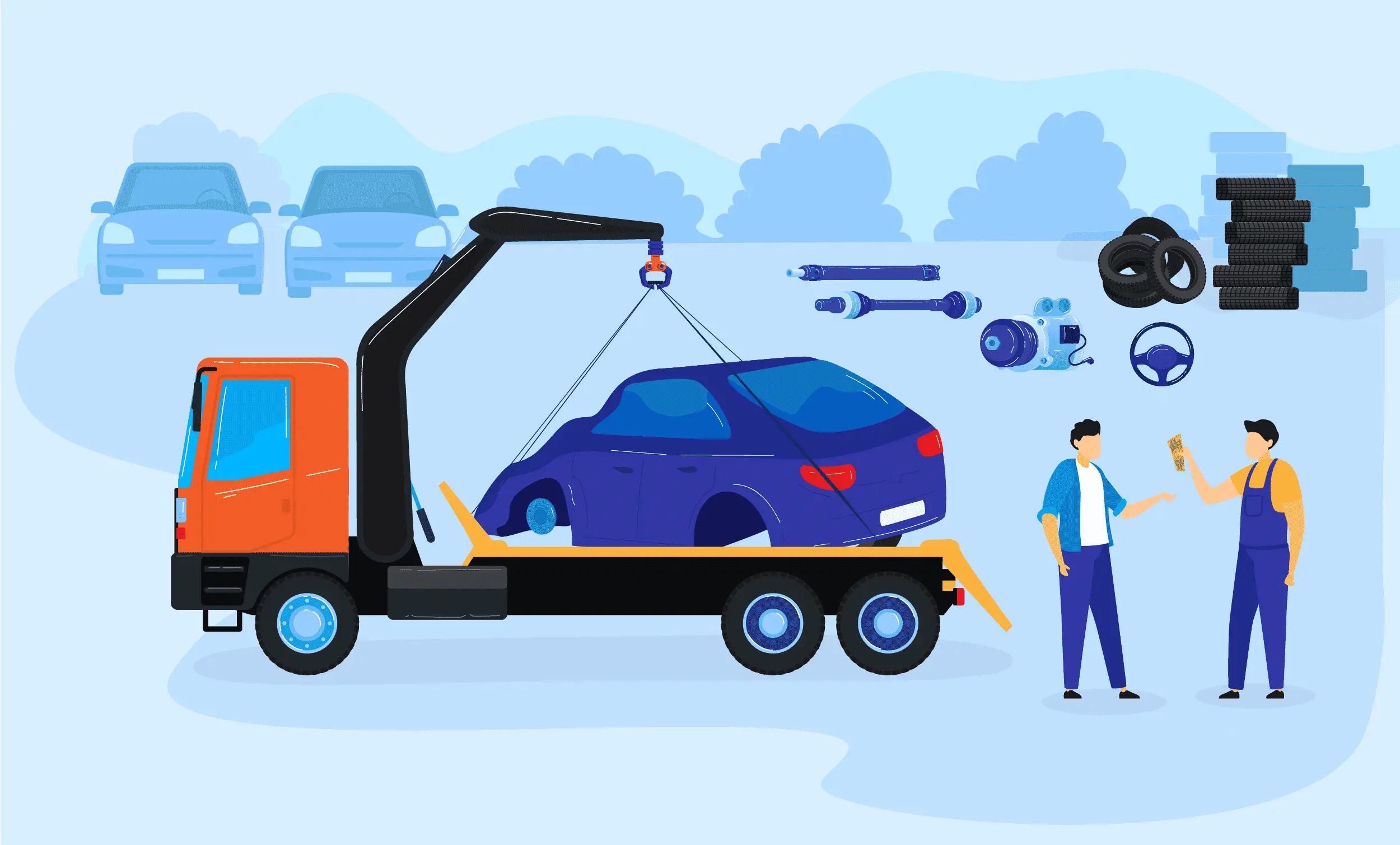
RC Cancellation During Scrapping – Carbasket's Process
Step 1: Pickup & Inspection
Vehicle collected from owner’s location.
Step 2: Chassis Number Verification
Ensures authenticity.
Step 3: Eco-Friendly Dismantling
At authorized RVSF facility.
Step 4: Certificate of Disposal (COD)
Owner receives benefits such as:
- Manufacturer discount
- Road tax rebate
- Registration fee waiver
Step 5: RTO Cancels RC in VAHAN
Vehicle is permanently removed from India’s transport database.
FAQs – Vehicle Registration, Fitness, Green Tax & Scrapping
1. Can I drive a vehicle with expired RC?
No. It is illegal and punishable with high fines.
2. How long is fitness valid for private vehicles?
5 years after renewal.
3. What happens if fitness test fails?
Vehicle must be repaired and retested.
4. Is green tax compulsory?
Yes, in many states for vehicles older than 15 years.
5. Can I scrap a vehicle without renewed RC?
Yes. Carbasket scrapping does NOT require valid RC.
6. Does scrapping give benefits?
Yes — you receive a Certificate of Deposit (COD).
7. How is RC cancelled?
Through Carbasket + RTO via VAHAN portal.