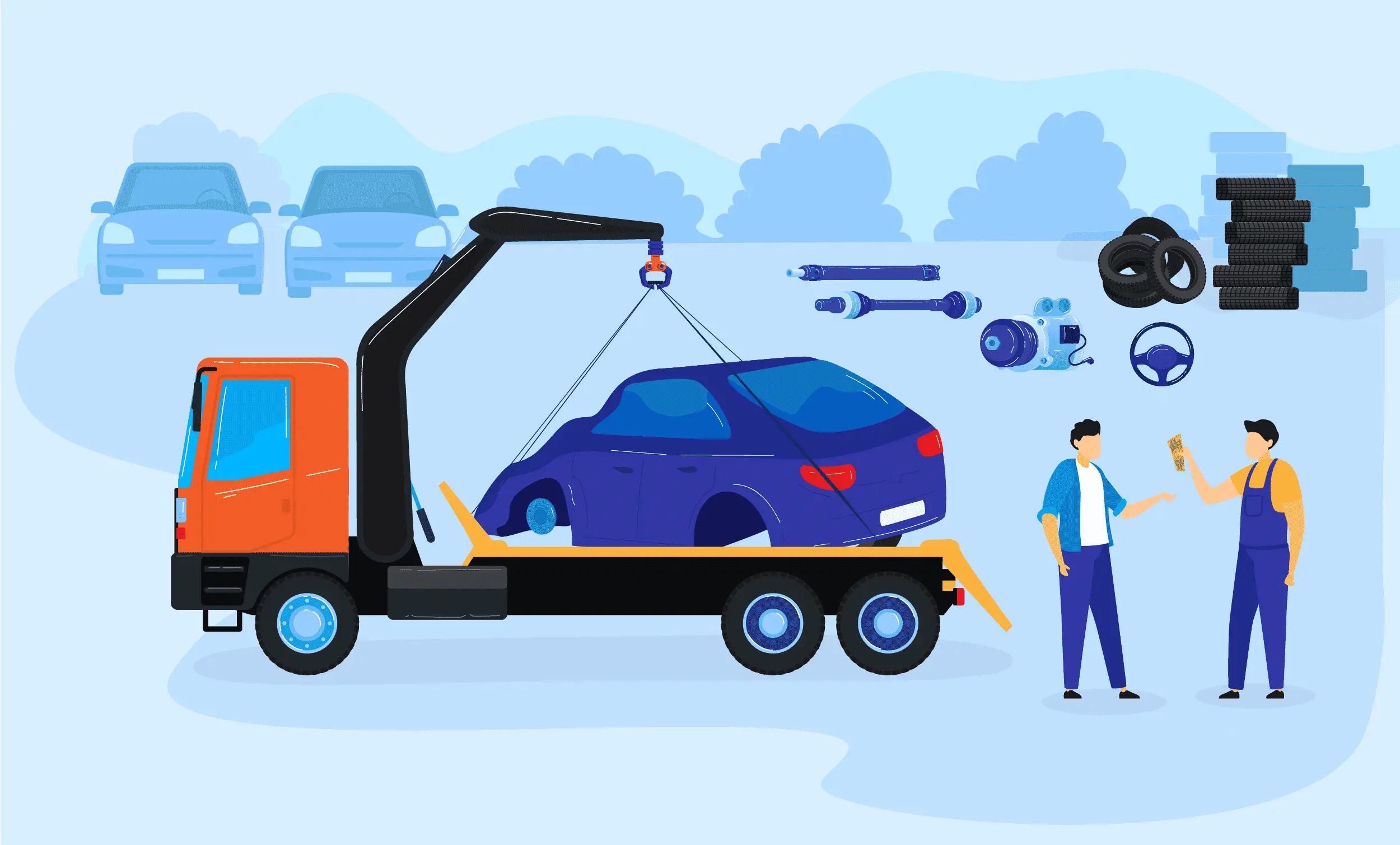
The automotive industry is moving from a traditional “manufacture and sell” model toward a more circular approach in which vehicle manufacturers are increasingly expected to consider what happens to vehicles after they reach the end of their useful life.
India has strengthened this framework through the Environment Protection (End-of-Life Vehicles) Rules, 2025, which introduced mandatory Extended Producer Responsibility (EPR) obligations for vehicle producers. The rules came into force on 1 April 2025 and apply to producers, registered owners, bulk consumers, Registered Vehicle Scrapping Facilities (RVSFs), collection centres and other entities involved in the handling and processing of end-of-life vehicles.
The framework is significant for automobile manufacturers because responsibility for end-of-life management is no longer limited to the vehicle owner or scrap market. Producers have defined obligations to support the environmentally sound scrapping of vehicles introduced into the Indian market.
Why Are OEMs Responsible for End-of-Life Vehicle Management?
A vehicle manufacturer influences much more than the vehicle's first day on the road.
From material selection and vehicle design to component composition, recyclability and dismantling requirements, manufacturers have an important role in determining how efficiently a vehicle can eventually be recovered and recycled.
The EPR framework places responsibility on the producer for vehicles introduced into the domestic market, including vehicles put to self-use, and requires producers to meet prescribed EPR scrapping targets.
This approach follows a broader circular-economy principle:
Manufacturer → Vehicle in use → End of life → Collection → Dismantling → Material recovery → Recycling → Secondary raw materials
Instead of allowing end-of-life vehicles to become an unmanaged waste stream, the system creates responsibilities across the automotive value chain.
What Are the Vehicle Scrappage Obligations for Auto OEMs?
Under the Environment Protection (End-of-Life Vehicles) Rules, 2025, producers have several important responsibilities.
1. Fulfil Extended Producer Responsibility
Producers must fulfil their EPR obligations for vehicles introduced or introduced into the domestic market, including vehicles put to self-use.
The rules define EPR in the context of ensuring environmentally sound scrapping of end-of-life vehicles.
2. Meet Prescribed Scrapping Targets
OEMs must meet the applicable EPR targets specified in the rules.
The targets are linked to the steel used in vehicles and vary according to vehicle category and compliance period.
NITI Aayog's 2026 report summarises the EPR framework as:
Compliance periodEPR target2025–20308%2030–203513%2035–2040 and onwards18%
The applicable historical vehicle cohort also differs between transport and non-transport vehicles because the rules account for their prescribed average life.
3. Encourage Collection of End-of-Life Vehicles
Producers must take measures to encourage owners to deposit ELVs at:
- Registered Vehicle Scrapping Facilities
- Designated collection centres
- Designated sales outlets where applicable
The rules also require producers to make necessary arrangements to receive ELVs at designated collection points and publish information about designated collection centres/sales outlets.
4. Use Registered Entities
A producer cannot simply fulfil its EPR obligation through an informal scrap dealer.
The rules require producers to work within the registered ecosystem for ELV scrapping and EPR compliance. Producers may fulfil EPR through EPR certificates generated by their own RVSF or by another RVSF, subject to the regulatory framework.
5. Purchase EPR Certificates
The EPR system introduces a market-based compliance mechanism.
Registered Vehicle Scrapping Facilities generate EPR certificates through the centralised system based on qualifying steel recovered from processed ELVs and certain automobile-sector steel scrap streams.
Producers can purchase these certificates through the centralised portal to meet their EPR obligations.
6. Follow AIS-129 Requirements
Producers are required to take measures to comply with AIS-129, which addresses environmentally sound handling and scrapping of vehicles and includes requirements relating to recyclability, recoverability and dismantling information.
7. Promote Sustainable Vehicle Production
The rules require producers to take measures for sustainable production of vehicles in accordance with applicable guidelines issued by the Central Pollution Control Board.
This encourages manufacturers to consider recyclability and resource recovery during vehicle design rather than treating recycling as an issue only after the vehicle becomes waste.
8. Create Consumer Awareness
OEMs are also expected to organise awareness campaigns and encourage customers to safely deposit ELVs at RVSFs or designated collection centres.
Manufacturers may use mechanisms such as:
- Buy-back schemes
- Deposit-refund schemes
- Customer incentives
- Trade-in programmes
- Designated collection networks
- Awareness campaigns
The rules specifically recognise these types of measures as tools for supporting EPR compliance and responsible ELV collection.
What Role Do Registered Vehicle Scrapping Facilities Play?
A Registered Vehicle Scrapping Facility (RVSF) is an important operational link between the vehicle owner, government registration system, manufacturer and recycling ecosystem.
The Motor Vehicles (Registration and Functions of Vehicle Scrapping Facility) Rules, 2021 apply to vehicle scrapping facilities and cover end-of-life vehicles, collection centres, automotive dismantling and recycling activities. They also provide for the Certificate of Deposit and Certificate of Vehicle Scrapping.
An RVSF can support the OEM ecosystem by:
- Receiving end-of-life vehicles
- Verifying vehicle documentation
- Recording vehicle details
- Dismantling vehicles
- Recovering recyclable materials
- Managing hazardous components appropriately
- Maintaining processing records
- Generating qualifying EPR certificates
- Supporting traceability within the regulated system
Under the 2025 ELV Rules, RVSFs are also required to file periodic returns regarding the weight of ELVs received and materials recycled, refurbished, sent for recycling/refurbishing or sent for appropriate treatment.
This makes the RVSF more than a conventional scrap yard.
It becomes an important part of the formal vehicle recycling and compliance infrastructure.
How Does the Vehicle Scrappage Policy Affect Auto Manufacturers?
The vehicle scrappage framework affects OEMs at several levels.
1. Compliance Responsibility
Manufacturers need systems to calculate and manage their EPR obligations.
This requires coordination between:
Sales data → Historical vehicle cohorts → EPR calculation → RVSF network → EPR certificates → Compliance reporting
2. Supply-Chain Integration
OEMs increasingly need relationships with compliant vehicle collection and recycling partners.
This can involve:
- RVSFs
- Collection centres
- Dealers
- Service networks
- Recycling companies
- Material processors
- Digital compliance platforms
3. Product Design
End-of-life considerations can influence vehicle engineering.
Manufacturers can increasingly focus on:
- Easier dismantling
- Material identification
- Recyclability
- Recoverability
- Reduced hazardous substances
- Component reuse
- Better material separation
AIS-129 is particularly relevant to this area.
4. Customer Engagement
OEMs can integrate scrappage into their customer lifecycle.
For example:
New vehicle purchase → Old vehicle exchange → ELV verification → RVSF collection → Scrapping → Recycling documentation
This can create a more transparent transition between an old vehicle and a new vehicle.
5. Financial Planning
EPR compliance can create a financial obligation for manufacturers because producers must meet prescribed targets and obtain qualifying EPR certificates where required.
Consequently, OEMs need to incorporate ELV compliance into long-term environmental and operational planning.
What Regulations Govern Vehicle Recycling in India?
Vehicle recycling in India is governed by multiple regulatory frameworks rather than one single law.
Environment Protection (End-of-Life Vehicles) Rules, 2025
These rules establish the EPR framework specifically for end-of-life vehicles and came into force from 1 April 2025.
The Ministry of Environment, Forest and Climate Change currently lists the 2025 ELV Rules under its rules and regulations.
Motor Vehicles (Registration and Functions of Vehicle Scrapping Facility) Rules, 2021
These rules establish the regulatory framework for vehicle scrapping facilities and cover collection, scrapping, recycling and documentation related to end-of-life vehicles.
AIS-129
AIS-129 provides requirements associated with environmentally sound handling and scrapping of vehicles, including aspects related to dismantling and recyclability/recoverability.
Battery Waste Management Rules, 2022
Vehicle batteries are subject to the separate battery-waste framework. The 2025 ELV Rules specifically exclude waste batteries covered by the Battery Waste Management Rules from their scope.
Hazardous and Other Wastes Rules
Waste streams such as used oil and waste tyres are addressed through separate waste-management provisions rather than being treated entirely under the ELV Rules.
E-Waste Management Rules
Applicable electronic and electrical waste streams are similarly governed by the separate e-waste framework.
This means an OEM's ELV compliance programme should be designed as an integrated waste-management strategy, not simply as a vehicle-dismantling programme.
How Can OEMs Support Sustainable Vehicle Disposal?
Automobile manufacturers can go beyond minimum compliance and build a stronger circular vehicle ecosystem.
1. Build a Reliable Collection Network
OEMs can integrate ELV collection into their dealer and service networks.
Customers should have an easy way to identify where their end-of-life vehicle can be legally deposited.
2. Partner With Registered RVSFs
Instead of relying on informal dismantling, OEMs can establish structured relationships with compliant RVSFs.
This improves:
- Traceability
- Documentation
- Material recovery
- Environmental compliance
- Customer confidence
3. Introduce Buy-Back and Deposit Schemes
A structured buy-back or deposit-refund mechanism can encourage owners to surrender old vehicles instead of keeping them unused or sending them into informal scrap channels.
The 2025 ELV Rules expressly recognise buy-back, deposit-refund and other schemes as mechanisms producers may deploy for EPR compliance.
4. Improve Vehicle Recyclability
Vehicle design should consider the complete product lifecycle.
The objective is not only:
How efficiently can we manufacture the vehicle?
but also:
How efficiently can the vehicle be dismantled, recovered and recycled at the end of its life?
5. Educate Vehicle Owners
Many owners do not know:
- What qualifies as an ELV
- Where to scrap a vehicle
- What documents are required
- Why informal dismantling can be problematic
- What certificates they should receive
- How the formal scrapping ecosystem works
OEMs can help close this information gap.
6. Use Digital Traceability
Digital records can connect:
Vehicle → Owner → Collection Point → RVSF → Dismantling → Material Recovery → EPR Certificate
This can improve transparency and reduce opportunities for vehicles to disappear into informal recycling channels.
Why Is Vehicle Recycling Important for the Automotive Industry?
Vehicle recycling is important because modern vehicles contain large quantities of recoverable materials.
These include:
- Steel
- Aluminium
- Copper
- Plastics
- Glass
- Rubber
- Batteries
- Electronic components
- Catalytic-converter materials
- Other valuable components
Recovering these materials can reduce the need for virgin raw materials and support a more circular automotive supply chain.
NITI Aayog's analysis of India's ELV ecosystem highlights the importance of formal recycling infrastructure, material recovery and traceability for developing a stronger circular economy.
For the automotive industry, the transition can create several long-term benefits:
Resource Efficiency
Recovered materials can become secondary raw materials for manufacturing.
Environmental Protection
Proper dismantling reduces uncontrolled disposal of oils, fluids, batteries and other potentially hazardous materials.
Circular Economy
Vehicles become a source of recoverable materials rather than simply becoming waste.
Regulatory Compliance
OEMs can demonstrate compliance with EPR and applicable environmental requirements.
Customer Trust
A transparent end-of-life programme gives customers confidence that their old vehicle is being handled responsibly.
Industry Sustainability
A circular vehicle lifecycle supports the industry's broader sustainability and resource-efficiency objectives.
OEMs and the Future of India's Vehicle Recycling Ecosystem
India's vehicle-scrappage framework is evolving from a fragmented scrap market toward a more structured ecosystem involving vehicle owners, OEMs, dealers, collection centres, RVSFs, recyclers, government authorities and digital platforms.
The 2025 ELV Rules represent an important shift because producers now have defined EPR obligations linked to vehicles introduced into the domestic market.
For automobile manufacturers, the strategic opportunity is bigger than regulatory compliance.
A well-designed ELV programme can become part of the manufacturer's:
- ESG strategy
- Circular-economy programme
- Customer-retention strategy
- Material recovery strategy
- Dealer ecosystem
- Sustainability reporting
- Product-development strategy
The future automotive lifecycle is therefore not simply:
Manufacture → Sell → Use
It is increasingly:
Design → Manufacture → Sell → Use → Collect → Dismantle → Recover → Recycle → Reuse
How CarBasket Can Support the ELV Ecosystem
CarBasket focuses on helping vehicle owners and stakeholders navigate the vehicle-scrapping ecosystem with an emphasis on documentation, transparency and responsible handling.
For OEMs, dealers, fleet operators and other automotive stakeholders, a structured ELV network can help connect vehicles reaching the end of their useful life with the appropriate collection, scrapping and recycling ecosystem.
A successful vehicle-scrapping programme should focus on:
Right vehicle identification + proper documentation + compliant processing + material recovery + traceability
The objective is simple: an end-of-life vehicle should not become an environmental or ownership problem. It should become a recoverable resource within a responsible recycling ecosystem.
Conclusion
Vehicle scrappage is becoming an increasingly important part of India's automotive industry.
With the Environment Protection (End-of-Life Vehicles) Rules, 2025, producers now have defined EPR responsibilities covering vehicles introduced into the domestic market.
For OEMs, the challenge is not simply to meet a numerical scrapping target. The larger opportunity is to build a transparent, traceable and environmentally sound end-of-life vehicle ecosystem.
The automotive industry's future will depend not only on how efficiently vehicles are manufactured, but also on how responsibly they are recovered, dismantled and recycled at the end of their useful life.
Responsible manufacturing does not end when a vehicle is sold. It continues until the vehicle's materials safely return to the circular economy.
Frequently Asked Questions
1. What are the vehicle scrappage obligations for auto OEMs in India?
Under the Environment Protection (End-of-Life Vehicles) Rules, 2025, producers have EPR obligations for vehicles introduced into the domestic market and must meet prescribed scrapping targets. They must also encourage ELVs to be deposited at RVSFs or designated collection centres and comply with applicable requirements such as AIS-129.
2. Are OEMs required to scrap every vehicle they manufacture?
The EPR framework does not simply require an OEM to physically scrap every vehicle it has manufactured. Instead, producers must meet prescribed EPR obligations and scrapping targets through the mechanisms established under the rules, including qualifying EPR certificates.
3. What is EPR for end-of-life vehicles?
EPR, or Extended Producer Responsibility, makes the producer responsible for supporting the environmentally sound management and scrapping of applicable end-of-life vehicles introduced into the market.
4. What is the EPR target for vehicle manufacturers?
For the 2025–2030 compliance period, the target is 8% under the schedule described by NITI Aayog, increasing to 13% for 2030–2035 and 18% from 2035 onwards. The calculation is linked to steel used and the applicable historical vehicle cohort.
5. Can an OEM fulfil EPR through another RVSF?
Yes. The 2025 ELV Rules allow producers to fulfil EPR through EPR certificates generated by their own RVSF or by another RVSF, subject to the applicable regulatory requirements.
6. What is the role of an RVSF?
An RVSF receives and processes end-of-life vehicles through the regulated scrapping framework. It performs activities such as vehicle processing, dismantling and material recovery and maintains required records and reporting.
7. Are electric vehicles covered by the ELV Rules?
Yes. The 2025 ELV Rules cover vehicle categories including electric and battery-operated vehicles, subject to the exclusions specified in the rules. Waste batteries themselves are separately governed under the Battery Waste Management Rules.
8. Which vehicles are excluded from the 2025 ELV Rules?
The rules exclude agricultural tractors, agricultural trailers, combine harvesters and power tillers. Certain waste streams, including batteries, e-waste, waste tyres and used oil, are also governed through separate waste-management rules.
9. Can OEMs offer vehicle buy-back programmes for old vehicles?
Yes. The 2025 ELV Rules specifically allow producers to deploy schemes such as buy-back schemes, deposit-refund schemes or other mechanisms to help fulfil EPR obligations.
10. Why should OEMs work with registered scrapping facilities?
Working with registered facilities helps establish a more formal chain for vehicle collection, dismantling, material recovery, documentation and EPR compliance rather than relying on unregistered scrap channels.
11. What is AIS-129?
AIS-129 is an automotive industry standard referenced in the ELV framework and relates to environmentally sound handling and scrapping, including aspects of dismantling and vehicle recyclability, recoverability and related information.
12. Why is vehicle recycling important for OEMs?
Vehicle recycling can help OEMs meet regulatory obligations, improve resource efficiency, support circular-economy objectives, recover valuable materials and strengthen sustainable product lifecycle management.