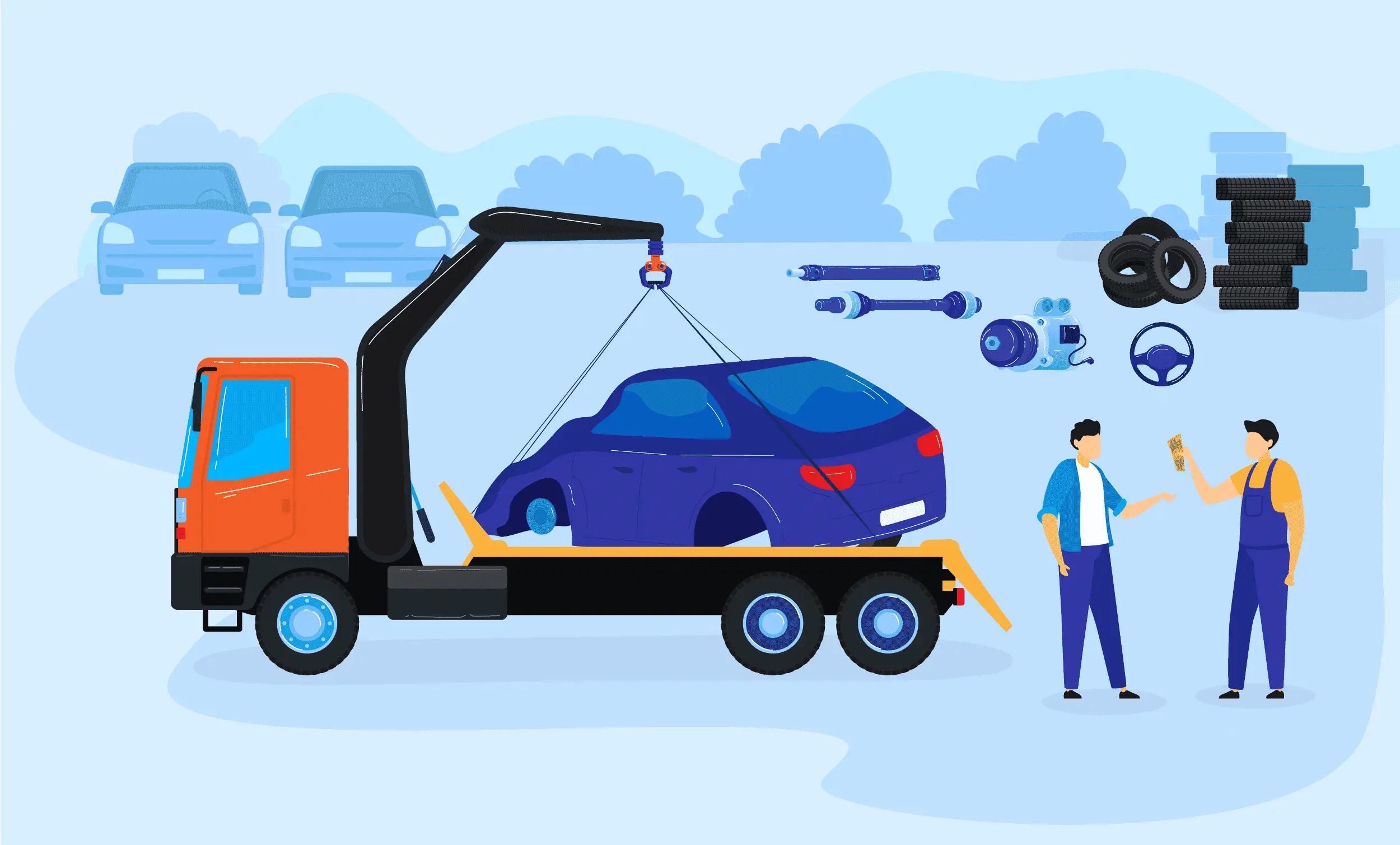
An End-of-Life Vehicle (ELV) is a vehicle that has reached the end of its useful life and is no longer suitable, economical, or legally permitted to remain in regular use on public roads.
An ELV may have become unsafe to drive, too expensive to repair, severely damaged, or no longer compliant with applicable legal requirements. Instead of remaining abandoned, unused, or improperly dismantled, such vehicles should be disposed of through environmentally responsible vehicle scrapping and recycling.
Proper ELV management helps recover valuable materials, reduces environmental pollution, frees public space, and supports India's circular economy.
When Does a Vehicle Become an End-of-Life Vehicle?
A vehicle may be considered an End-of-Life Vehicle in situations such as:
1. Vehicles That Are No Longer Validly Registered
A vehicle whose registration has expired or is otherwise no longer valid under applicable laws may eventually require disposal if it cannot be legally returned to service.
2. Vehicles Declared Unfit by an Automated Fitness Centre
Commercial and transport vehicles, and other vehicles where fitness certification is required, may be declared unfit after inspection at an Automated Fitness Centre (AFC) if they fail to meet the prescribed roadworthiness standards.
3. Vehicles Whose Registration Has Been Cancelled by a Competent Authority or Court Order
In certain cases, a vehicle's registration may be cancelled pursuant to applicable legal or judicial orders, making continued road use impermissible.
4. Vehicles Voluntarily Declared for Scrapping by the Owner
Owners may decide that an old, damaged, accident-affected, flood-damaged, fire-damaged, or uneconomical vehicle is no longer worth repairing and voluntarily choose to dispose of it through a responsible vehicle scrapping facility.
Carbasket assists owners in facilitating the scrapping process for such eligible vehicles.
Other Common Reasons a Vehicle Becomes an ELV
A vehicle may also reach the end of its useful life due to:
- Severe accident damage
- Fire damage
- Flood damage
- Structural corrosion
- Chassis damage
- Engine failure
- Gearbox failure
- Repeated mechanical breakdowns
- Excessive repair costs
- Insurance total-loss declaration
- Long-term abandonment
- Missing major components
- End of commercial usefulness
Why Responsible ELV Scrapping Is Important
Old vehicles contain numerous recyclable and hazardous materials.
Responsible scrapping helps:
- Recover steel, aluminium, copper, plastics, rubber, and glass.
- Prevent leakage of oils, coolants, fuels, and battery chemicals.
- Reduce illegal dumping and abandoned vehicles.
- Support environmentally responsible recycling.
- Reduce pressure on natural resources.
- Improve road safety by removing unsafe vehicles.
- Support India's sustainable mobility goals.
What Happens During ELV Scrapping?
A responsibly managed ELV generally undergoes several stages:
Vehicle Inspection
Basic details, ownership documents, and the vehicle condition are verified.
Pickup
Eligible vehicles can be collected from homes, offices, workshops, parking facilities, fleet yards, institutions, or other accessible locations.
Safe Dismantling
Vehicles are dismantled responsibly to separate reusable and recyclable materials.
Hazardous Material Handling
Components such as batteries, oils, coolants, refrigerants, and other regulated materials are handled through appropriate downstream recycling or disposal channels in accordance with applicable environmental regulations.
Material Recovery
Recyclable materials are recovered and directed into the recycling supply chain, helping reduce waste.
What Types of Vehicles Can Become ELVs?
Almost every category of vehicle may eventually become an End-of-Life Vehicle, including:
Passenger Vehicles
- Hatchbacks
- Sedans
- SUVs
- Luxury cars
Two-Wheelers
- Motorcycles
- Scooters
- Mopeds
Three-Wheelers
- Passenger auto rickshaws
- Cargo autos
- Electric three-wheelers
Electric Vehicles
- Electric cars
- Electric scooters
- Electric motorcycles
- Electric buses
Commercial Vehicles
- Trucks
- Buses
- Vans
- Pickups
- Tippers
Government & Institutional Vehicles
- Government fleet vehicles
- Municipal vehicles
- Utility vehicles
- Public sector vehicles
Agricultural & Industrial Vehicles
- Tractors
- Construction equipment
- Farm machinery
- Industrial utility vehicles
Carbasket ELV Scrapping Services
Carbasket facilitates responsible vehicle scrapping services across India for eligible End-of-Life Vehicles.
Services Include
- Free pickup for eligible vehicles
- Vehicle evaluation
- Individual and bulk fleet scrapping
- Passenger vehicle scrapping
- Commercial vehicle scrapping
- Electric vehicle (EV) scrapping
- Government vehicle scrapping
- Auto rickshaw and three-wheeler scrapping
- Scrap Certificate and Certificate of Disposal support (where applicable)
- Environmentally responsible recycling coordination
Important: RC cancellation and any other statutory formalities remain the responsibility of the vehicle owner with the respective Regional Transport Office (RTO) or other competent authority, as applicable.
Why Choose Carbasket?
- Pan-India vehicle scrapping support
- Free pickup for eligible vehicles
- Any brand, model, or condition
- Individual and bulk fleet disposal
- Professional customer support
- Responsible vehicle recycling
- Convenient documentation assistance
Carbasket has supported vehicle owners, businesses, fleet operators, institutions, and authorised organisations with end-of-life vehicle disposal across India.
Benefits of Scrapping an ELV
Choosing responsible scrapping instead of abandoning an old vehicle offers several advantages:
- Frees parking and storage space
- Reduces environmental pollution
- Encourages recycling of valuable materials
- Prevents hazardous waste leakage
- Supports cleaner cities
- Contributes to sustainable resource management
- Reduces maintenance expenses on unusable vehicles
Conclusion
Every vehicle eventually reaches the end of its useful life. Whether due to age, accident damage, failed fitness requirements, or voluntary retirement, an End-of-Life Vehicle should be managed responsibly.
Choosing proper vehicle scrapping helps recover valuable resources, reduce pollution, improve public safety, and support sustainable development.
Carbasket makes this process simple by facilitating vehicle scrapping services across India with free pickup for eligible vehicles, documentation support, and environmentally responsible recycling.
Contact Carbasket
📞 Phone: +91 89033 31448
🌐 Website: https://carbasket.in
📧 Email: [email protected]
Frequently Asked Questions (FAQs)
1. What is an End-of-Life Vehicle (ELV)?
An ELV is a vehicle that has reached the end of its useful life because it is no longer roadworthy, economical to repair, or legally suitable for continued use.
2. Does every old vehicle become an ELV?
Not necessarily. A vehicle generally becomes an ELV when it is permanently retired from use due to age, condition, legal status, or the owner's decision to dispose of it responsibly.
3. Can I voluntarily scrap my vehicle?
Yes. If you decide your vehicle is no longer worth repairing or maintaining, you may choose to dispose of it through a responsible vehicle scrapping facility, subject to applicable legal requirements.
4. Does Carbasket provide free pickup?
Yes. Carbasket offers free pickup for eligible vehicles from most locations across India.
5. What vehicles does Carbasket accept?
Cars, bikes, scooters, auto rickshaws, electric vehicles, commercial vehicles, buses, trucks, tractors, government vehicles, and many other eligible vehicle categories.
6. Does Carbasket cancel my RC?
No. RC cancellation and other statutory requirements remain the responsibility of the vehicle owner with the respective RTO or competent authority. Carbasket provides supporting scrapping documentation where applicable.
7. Can Carbasket scrap accident-damaged or non-running vehicles?
Yes. Eligible accident-damaged, flood-damaged, fire-damaged, non-running, insurance total-loss, and end-of-life vehicles can be facilitated for scrapping.
8. Why should I scrap an ELV instead of leaving it parked?
Abandoned vehicles can create safety risks, occupy valuable space, and may leak hazardous materials over time. Responsible scrapping helps protect the environment and supports recycling.
9. Can businesses scrap multiple vehicles?
Yes. Carbasket supports bulk vehicle scrapping for fleet operators, companies, institutions, government organisations, and commercial vehicle owners.
10. Why choose Carbasket for ELV scrapping?
Carbasket offers pan-India support, free pickup for eligible vehicles, assistance with scrapping documentation, and environmentally responsible recycling for vehicles of all brands, models, and conditions.