Auto-rickshaws are one of the most familiar sights on Indian roads. Whether you're travelling through busy metropolitan cities like Bengaluru, Delhi, Mumbai, Chennai or smaller towns, you'll almost certainly spot hundreds of three-wheelers carrying passengers every day.
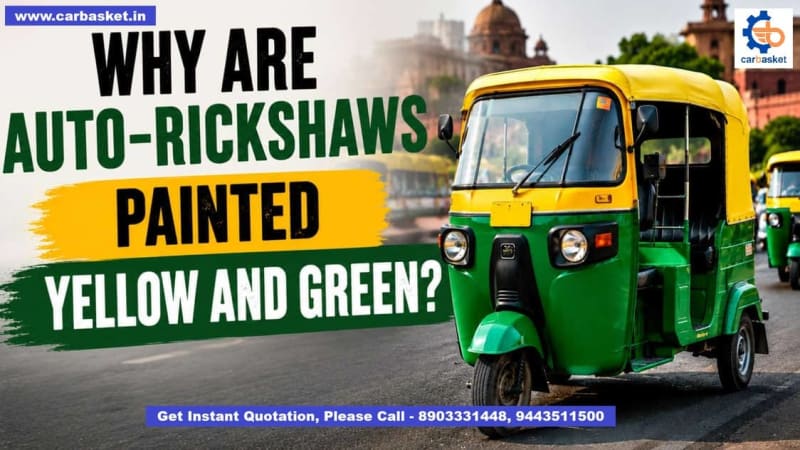
One feature that immediately stands out is their distinctive yellow-and-green colour combination. While many people assume this is simply a design choice, the colours actually serve practical, historical and regulatory purposes.
Interestingly, not every state follows the same colour scheme. Different state transport authorities prescribe different colours for auto-rickshaws based on local regulations, vehicle categories and regional identity.
In this article, we'll explore:
- Why auto-rickshaws are painted yellow and green
- The science behind these colours
- Why different states have different coloured autos
- The history of auto-rickshaw colours in India
- Types of auto-rickshaws
- When an old auto should be scrapped
- How Carbasket helps recycle old three-wheelers responsibly
Why Are Auto-Rickshaws Painted Yellow and Green?
The famous yellow-and-green combination wasn't chosen merely because it looks attractive.
It was selected because it improves:
- Visibility
- Passenger recognition
- Road safety
- Uniformity
- Heat management
- Commercial identification
For decades, transport departments across India have encouraged or mandated this colour combination for passenger auto-rickshaws.
Why Is the Roof Yellow?
The upper portion of most auto-rickshaws is painted bright yellow for several reasons.
1. Easy Visibility
Yellow is among the most visible colours to the human eye.
Drivers and pedestrians can quickly identify an approaching auto, even in:
- Heavy traffic
- Rain
- Fog
- Evening hours
- Crowded markets
Higher visibility contributes to safer road conditions.
2. Better Heat Reflection
Yellow reflects more sunlight than darker colours.
Since auto-rickshaws spend long hours outdoors, a lighter roof absorbs less heat than black or dark-painted surfaces, helping reduce cabin temperature.
3. Passenger Recognition
The yellow roof has become a visual cue that instantly tells commuters:
"This is a public passenger auto."
This makes it easier for people to identify available transport quickly.
Why Is the Lower Body Green?
The green lower section serves both functional and symbolic purposes.
Cleaner Appearance
The lower part of an auto is exposed to:
- Dust
- Mud
- Road grime
- Water splashes
- Oil stains
Green helps hide minor dirt better than lighter colours, reducing the appearance of wear between washes.
Environmental Association
In many cities, green also became associated with cleaner transportation, particularly after the widespread adoption of CNG and LPG auto-rickshaws. While the colour itself does not guarantee the fuel type, it has become linked in the public mind with environmentally friendlier urban transport.
Why Don't All States Use Yellow and Green?
India does not have a single nationwide colour rule for auto-rickshaws.
Each state's transport department may specify different colour schemes.
These colour combinations help transport authorities distinguish commercial passenger vehicles from private vehicles and may vary by local regulations or permit categories.
Why Are Auto-Rickshaw Colours Standardised?
Standard colours help:
- Identify commercial passenger vehicles
- Improve visibility
- Maintain uniformity
- Assist tourists
- Simplify enforcement by transport authorities
- Build public recognition
Passengers can quickly identify an auto-rickshaw from a distance, making urban transportation more convenient.
Evolution of Auto-Rickshaw Colours
In the early years of three-wheeler transport in India, colours varied considerably. Over time, state governments introduced prescribed colour schemes to create a consistent identity for commercial passenger vehicles. Today, while colour combinations differ between states, the objective remains the same: easy identification, improved visibility and regulatory uniformity.
Different Types of Auto-Rickshaws in India
Modern three-wheelers are available in several variants:
- Petrol auto-rickshaws
- CNG auto-rickshaws
- LPG auto-rickshaws
- Diesel auto-rickshaws (older models)
- Electric auto-rickshaws (E-rickshaws in applicable categories)
- Cargo auto-rickshaws
- Passenger auto-rickshaws
- Commercial delivery three-wheelers
As technology advances, many cities are encouraging cleaner and electric alternatives to reduce emissions.
When Should an Auto-Rickshaw Be Scrapped?
Like any vehicle, an auto-rickshaw eventually reaches the end of its service life.
It may be time to consider scrapping if the vehicle:
- Has suffered severe accident damage
- Has extensive chassis corrosion
- Fails emission requirements
- Requires uneconomical repairs
- Is declared a total loss by an insurer
- Has become unsafe for passengers
- Has reached the end of its economically viable life
Responsible recycling helps recover valuable materials and prevents unsafe vehicles from remaining on the road.
Delhi to Register Only Electric Auto-Rickshaws from 2027: What It Means for Auto Owners
Delhi is taking a major step toward cleaner transportation under its new Electric Vehicle (EV) Policy. As part of the policy, from 1 January 2027, only electric passenger and goods auto-rickshaws will be eligible for fresh registration in Delhi. Existing CNG auto-rickshaws are not automatically banned overnight, but the policy shifts new registrations toward electric three-wheelers and gradually accelerates the transition to cleaner mobility.
The policy aims to reduce vehicular emissions, improve air quality and encourage widespread adoption of zero-emission public transport. It is accompanied by incentives for electric autos and plans to expand charging infrastructure across the city.
Why Is Delhi Promoting Electric Auto-Rickshaws?
Delhi experiences some of the highest levels of urban air pollution in India. Three-wheelers travel long distances every day and collectively contribute to transport emissions. By encouraging electric auto-rickshaws, the government aims to:
- Reduce tailpipe emissions
- Improve urban air quality
- Lower dependence on fossil fuels
- Reduce noise pollution
- Support India's clean mobility goals
- Encourage sustainable public transportation
According to the policy, expanding charging infrastructure and financial incentives will play a key role in supporting the transition.
Benefits of Electric (EV) Auto-Rickshaws
1. Zero Tailpipe Emissions
EV autos do not emit exhaust gases while operating, helping improve local air quality in congested cities.
2. Lower Running Costs
Electricity generally costs less than petrol, diesel or CNG on a per-kilometre basis, which can reduce daily operating expenses.
3. Lower Maintenance
Electric vehicles have fewer moving parts than internal combustion engine vehicles, resulting in:
- No engine oil changes
- Fewer filters
- Reduced engine maintenance
- Lower routine servicing requirements
4. Quieter Operation
Electric autos produce significantly less engine noise, creating a more comfortable environment for passengers and nearby communities.
5. Government Support
Depending on applicable policies and schemes, EV owners may benefit from incentives such as purchase assistance, tax concessions or registration benefits. Availability varies over time and by jurisdiction.
6. Better for the Environment
Electric auto-rickshaws contribute to:
- Lower urban pollution
- Reduced greenhouse gas emissions (especially when paired with cleaner electricity sources)
- Cleaner streets
- Sustainable urban transport
Challenges During the Transition
The shift to electric autos also presents challenges that need to be addressed:
- Expansion of charging stations
- Charging time compared with refuelling
- Higher upfront purchase cost
- Battery replacement costs over the long term
- Training for drivers and mechanics
Driver groups have also highlighted the need for reliable charging infrastructure before large-scale adoption.
What Should Existing Auto Owners Do?
Owners of older or accident-damaged auto-rickshaws should:
- Monitor announcements from the Delhi Transport Department.
- Understand permit renewal and registration requirements.
- Evaluate whether repairing an aging vehicle is economically viable.
- Consider replacing end-of-life vehicles with newer, cleaner alternatives where appropriate.
Carbasket Supports Auto-Rickshaw Scrapping During the EV Transition
As cities move toward cleaner transportation, many older three-wheelers will eventually reach the end of their useful life.
Carbasket helps owners responsibly recycle:
- Old auto-rickshaws
- End-of-Life (ELV) autos
- Accident-damaged auto-rickshaws
- Insurance total-loss autos
- CNG, petrol and diesel three-wheelers that are no longer economical or safe to operate
Carbasket has frequently assisted customers with auto-rickshaw scrapping in:
- Bengaluru
- Delhi
- Indore
- Hyderabad
- Chennai
- Pune
- Mumbai
- Ahmedabad
- Jaipur
- Lucknow
- And many other serviceable locations across India
The company supports vehicle owners through:
- Pickup coordination (where available)
- Documentation guidance
- Environmentally responsible dismantling and recycling
- Recovery of recyclable materials such as steel, aluminium, copper, rubber and plastics
- Scrapping documentation through the recycling process
Responsible recycling helps remove unsafe vehicles from the road while recovering valuable materials for reuse, supporting India's circular economy and cleaner transportation future.
Carbasket's Role in Auto-Rickshaw Scrapping and Recycling
CarBasket supports the responsible recycling of old, damaged and End-of-Life auto-rickshaws across multiple cities in India.
The company has frequently assisted customers with three-wheeler scrapping in cities such as:
and also supports customers in many other serviceable locations across India, subject to operational availability.
Auto-Rickshaw Types Supported
CarBasket assists with:
- Passenger auto-rickshaws
- CNG autos
- LPG autos
- Petrol autos
- Diesel autos
- Electric three-wheelers (where applicable)
- Cargo auto-rickshaws
- Commercial three-wheelers
- Accident-damaged autos
- Insurance total-loss vehicles
- End-of-Life auto-rickshaws
How Carbasket Helps
CarBasket provides support throughout the scrapping process by helping vehicle owners with:
- Vehicle inspection coordination
- Pickup arrangements from eligible locations
- Documentation guidance
- Environmentally responsible dismantling and recycling
- Recovery of recyclable materials such as steel, aluminium, copper, rubber and plastics
- Scrapping documentation through the recycling process
This approach supports cleaner cities, efficient resource recovery and India's circular economy.
Benefits of Recycling Old Auto-Rickshaws
Recycling outdated three-wheelers offers several advantages:
- Reduces air pollution
- Conserves natural resources
- Recovers reusable metals and plastics
- Frees valuable parking space
- Prevents unsafe vehicles from remaining in service
- Supports sustainable manufacturing through recycled materials
Interesting Facts About Auto-Rickshaws
- India has millions of registered three-wheelers operating across urban and rural areas.
- Auto-rickshaws are among the most affordable forms of last-mile public transport.
- Many cities have transitioned large portions of their fleets to cleaner fuels such as CNG.
- Electric three-wheelers are becoming increasingly common in urban mobility.
- Standardised colours make auto-rickshaws instantly recognisable to residents and tourists alike.
Conclusion
The yellow-and-green colour combination of Indian auto-rickshaws is the result of practical considerations rather than mere aesthetics. Bright yellow improves visibility and recognition, while green helps maintain a cleaner appearance and has become associated with environmentally conscious urban transport in many regions. Different states use their own approved colour schemes, reflecting local transport regulations and traditions.
As older auto-rickshaws reach the end of their useful life, responsible recycling becomes essential. CarBasket supports owners by facilitating the scrapping and environmentally responsible recycling of old, accident-damaged and End-of-Life three-wheelers across Bengaluru, Delhi, Indore and many other serviceable locations, helping recover valuable materials and contribute to a cleaner, more sustainable transportation ecosystem.
Frequently Asked Questions (FAQs)
Why are most auto-rickshaws yellow and green?
The colours improve visibility, make commercial passenger vehicles easy to recognise and align with state transport regulations in many regions.
Why do some states use different auto-rickshaw colours?
Transport departments in different states prescribe their own approved colour schemes based on local regulations and permit categories.
Does green mean the auto runs on CNG?
Not necessarily. While green has become associated with cleaner transport in many cities, the colour alone does not indicate the vehicle's fuel type.
Which cities commonly have yellow-and-green auto-rickshaws?
Yellow-and-green auto-rickshaws are commonly seen in cities such as Bengaluru, Delhi and Indore, although exact colour schemes may vary by state and permit regulations.
When should an old auto-rickshaw be scrapped?
Owners should consider scrapping when the vehicle is severely damaged, unsafe, uneconomical to repair or has reached the end of its useful life.
Can accident-damaged auto-rickshaws be recycled?
Yes. Severely damaged or insurance total-loss three-wheelers can often be dismantled and recycled responsibly after completing the necessary legal and documentation requirements.
Does Carbasket provide auto-rickshaw scrapping?
Yes. CarBasket assists with the scrapping and recycling of passenger and commercial auto-rickshaws, including accident-damaged and End-of-Life vehicles, in Bengaluru, Delhi, Indore and other serviceable locations across India.